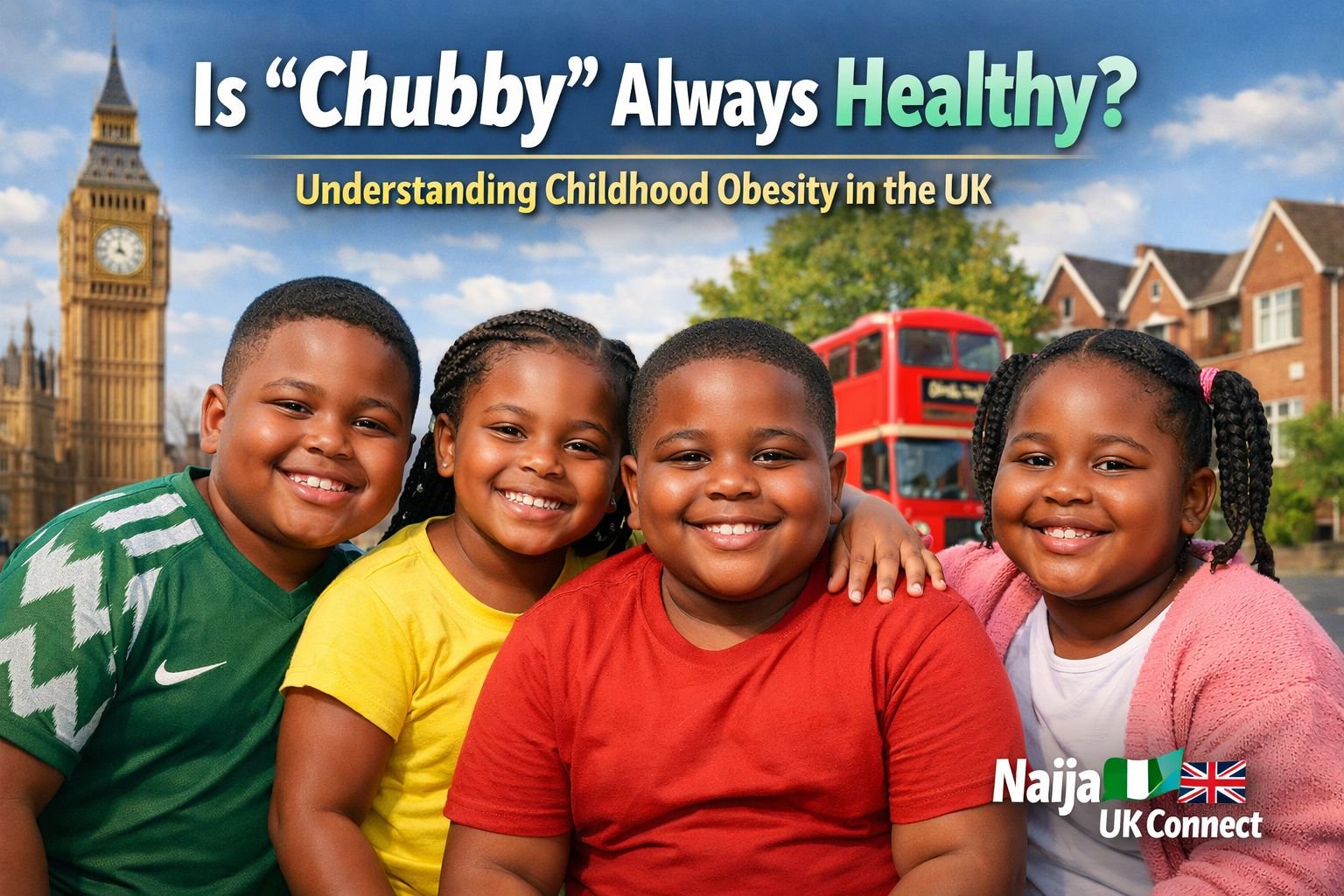
For many African families—especially Nigerians—seeing a child that is “big,” “chubby,” or “well-fed” is often a source of pride.
In our culture, we associate a robust child with good parenting, good food, and financial stability. Phrases like “this child is enjoying” or “double quality” are common compliments.
But living in the UK comes with a different health reality.
Recent data from global health organisations shows that many parents underestimate when their children are overweight, especially in African and migrant communities.
So the question is:
👉 Is “chubby” always healthy?
Why Many African Parents in the UK Miss the Signs
For Africans living in the UK, this issue is not just medical—it’s cultural and lifestyle-related.
1. The “Healthy = Big” Mindset
Back home, being slim is sometimes linked to illness or hardship. So naturally, when a child looks fuller, we see it as a sign they are thriving.
But in the UK, medical standards (like BMI) may classify that same body size as overweight or obese.
2. Food as Love
In many African homes, food is how we show love.
- Extra rice or swallow
- Bigger portions
- Treats after school
- Sugary drinks and snacks
While these come from a good place, they can lead to overfeeding without balance.
3. The “Everyone Looks Like That” Trap
If children in your family or community have similar body types, it can feel “normal.”
But comparing children to relatives instead of health guidelines (like NHS growth charts) can lead to missed warning signs.
4. UK Lifestyle Changes
Life in the UK is different:
- Less outdoor play due to weather
- More screen time (phones, tablets, TV)
- Busy schedules for parents
Weight gain can happen gradually—especially during long winters—making it harder to notice early.
Why This Matters for Our Children
Childhood obesity is not just about appearance—it has real health risks, especially for Africans in the UK.
These include:
⚠️ Type 2 Diabetes
Already more common in Black communities and can start early if not managed.
⚠️ High Blood Pressure
Can develop at a young age and lead to long-term heart issues.
⚠️ Low Confidence & Social Impact
Children may struggle with self-esteem, bullying, or reduced participation in activities.
⚠️ Reduced Physical Fitness
Less energy for sports and daily activities.
What African Parents in the UK Can Do
The goal is not perfection—it’s awareness and balance.
✔️ Don’t Rely on Appearance Alone
A child may look “fine” but still be overweight.
👉 Use NHS tools like BMI calculators
👉 Ask your GP during check-ups
✔️ Speak to Your GP Early
Don’t wait.
Ask simple questions like:
“Is my child’s weight healthy for their age?”
Early advice can prevent long-term issues.
✔️ Balance Traditional Meals (Don’t Eliminate Them)
You don’t need to stop cooking African food.
Instead:
- Reduce oil in soups and stews
- Add more vegetables
- Control portion sizes
- Limit sugary drinks and snacks
👉 It’s not about removing culture—it’s about improving balance.
✔️ Encourage More Physical Activity
In the UK, you may need to be intentional.
Try:
- Indoor sports centres
- After-school clubs
- Weekend park visits
- Family walks
👉 Replace some screen time with active time
The Bottom Line
Recognising that a child may be overweight is not bad parenting—it’s responsible parenting.
As Africans raising children in the UK, we must balance:
- Our cultural values
- Modern health knowledge
- The realities of UK lifestyle
Small changes today can protect your child’s future.
Let’s Raise Healthy, Strong Children the Right Way 🇳🇬🇬🇧
At Naija UK Connect, we believe success is not just about jobs and visas—it’s also about healthy families and thriving communities.
Join Our WhatsApp Channel
Stay updated on the latest UK news, including education, health, job openings, and more for those living in the UK!
Join here: Naija UK Channel
Also, follow us on our social media channels for the latest updates and discussions:
- Twitter: @NaijaUKConnect
- Facebook: Naija UK Connect
- Instagram: @naijaukconnect