
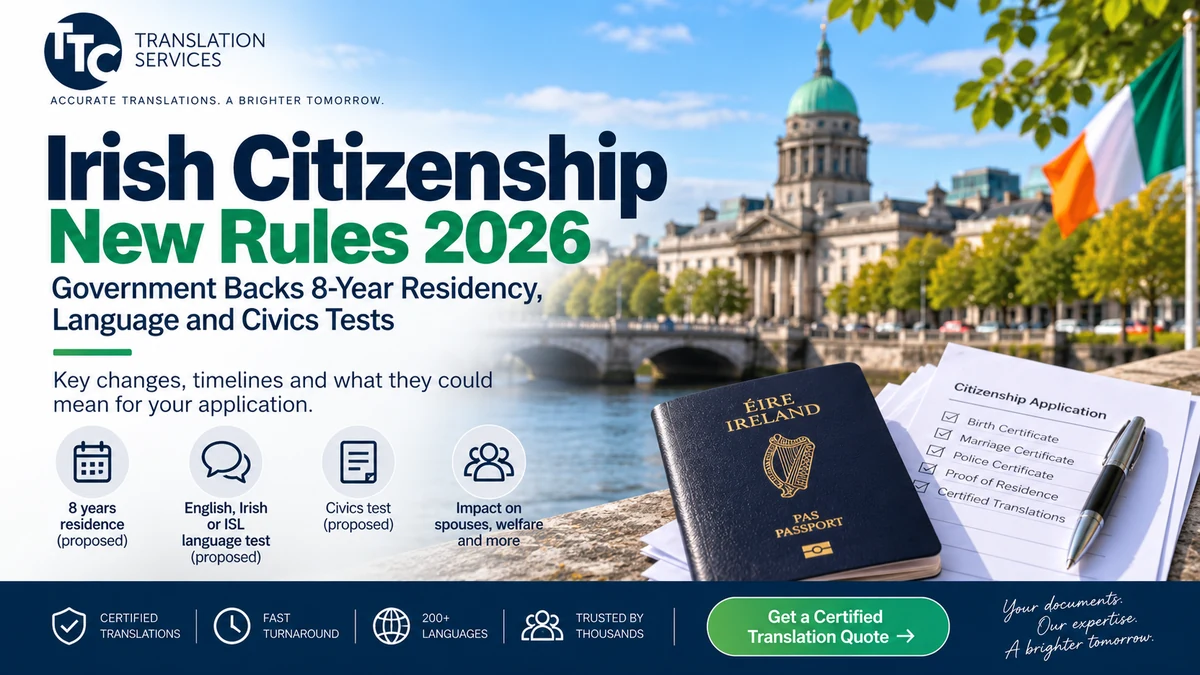
Ireland Citizenship Rules 2026: Proposed 8-Year Residency, Language and Civics Tests
Ireland is considering significant changes to its citizenship rules that could make the naturalisation process more demanding for some applicants.
Proposals under consideration include extending the standard qualifying residence period from five years to eight years, introducing language and civics assessments, and requiring applicants to demonstrate that they can support themselves financially.
However, these measures are proposals and are not yet law. The existing citizenship rules remain in force unless and until new legislation is passed and implemented.
Proposed Changes to Irish Citizenship
The Irish Government has approved priority legislation that could introduce several new requirements for people applying for citizenship through naturalisation.
The proposed changes include:
1. Eight Years of Qualifying Residence
The standard qualifying residence requirement could increase from the current five years to eight years for many applicants.
This would represent a significant extension of the period applicants would need to build up before becoming eligible to apply for naturalisation.
2. Language Requirement
Applicants could be required to demonstrate proficiency in Irish, English or Irish Sign Language as part of the naturalisation process.
The proposed language assessment would introduce an additional requirement that does not currently form part of the standard citizenship application process.
3. Irish Civics and Society Test
A new civics assessment could also be introduced.
The proposed test would cover areas such as Irish society, politics, government and national institutions, with the aim of assessing applicants’ knowledge of the country and its civic structures.
4. Financial Self-Sufficiency
Another proposed requirement would involve demonstrating the ability to support oneself financially.
Financial self-sufficiency is not currently a general statutory requirement for Irish naturalisation, although financial criteria already apply to certain other immigration permissions.
The Proposed Rules Are Not Yet in Force
People currently living in Ireland should not assume that these proposals have already changed their citizenship eligibility.
The legislation is still at an early stage, and the Irish Government has indicated that the proposals may be amended during the legislative process.
Until new legislation is enacted and implemented, the existing naturalisation requirements continue to apply.
Applicants should therefore rely on the current official rules when assessing their eligibility rather than treating the proposed changes as confirmed law.
Changes Affecting Refugees
The proposals come after a recent change affecting refugees seeking Irish citizenship.
For refugees, the naturalisation residence requirement has increased from three years to five years.
This change is separate from the proposed extension of the standard residence requirement for other applicants. Until any new legislation takes effect, other naturalisation applicants remain subject to the existing five-year residence framework.
What the Proposed Changes Could Mean
If enacted in their proposed form, the reforms would introduce additional requirements for people seeking Irish citizenship through naturalisation.
Applicants could potentially need to:
- Complete a longer qualifying residence period.
- Demonstrate language ability.
- Pass a civics and Irish society assessment.
- Provide evidence of financial self-sufficiency.
- Continue meeting the other existing naturalisation requirements.
The proposals also reflect a broader European policy trend in which citizenship systems increasingly place emphasis on language ability, civic knowledge and economic integration, in addition to residence.
Applicants Should Monitor Further Developments
Because the proposed legislation has not yet become law, applicants should avoid making major changes to their immigration or citizenship plans based solely on the proposals.
The final legislation could change during parliamentary scrutiny, legal review and implementation planning.
Anyone considering applying for Irish citizenship should check the latest official requirements at the time of application and obtain appropriate immigration or legal advice where necessary.
Important Notice
The proposed eight-year residence requirement, language test, civics test and financial self-sufficiency requirement described above are not currently applicable as confirmed general naturalisation rules. They remain subject to the legislative process and could be changed before implementation.
Always verify the latest requirements with the Irish authorities before making immigration or citizenship decisions.
Join Naija UK Connect
Stay updated with the latest UK visa sponsorship jobs, relocation opportunities, and career guides tailored for Nigerians through Naija UK Connect.
Join here: Naija UK Channel
Also, follow us on our social media channels for the latest updates and discussions:
Twitter: @NaijaUKConnect
Facebook: Naija UK Connect
Instagram: @naijaukconnect