NHS Launches World’s Largest AI-Assisted Breast Screening Trial to Improve Early Cancer Detection
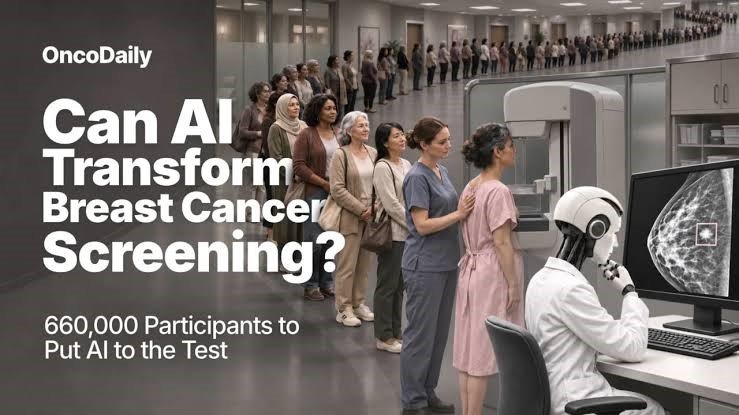
The NHS has begun inviting women to take part in what is being described as the world’s largest artificial intelligence (AI)-assisted breast screening trial. The initiative will investigate whether AI technology can help detect breast cancer earlier, improve screening efficiency and give specialist clinicians more time to care for patients.
Over the next three years, nearly 700,000 women attending routine NHS breast screening appointments are expected to be included in the study, known as the EDITH trial.
The £10 million government-funded research project is supported by the National Institute for Health and Care Research (NIHR) and led by the University of Warwick, the University of Cambridge and Cambridge University Hospitals NHS Foundation Trust, working in partnership with NHS England.
How the AI Breast Screening Trial Will Work
The EDITH trial will examine how AI-assisted technology can support specialists when reviewing mammogram images.
At present, two specialists are required to independently review each breast screening mammogram. The trial will assess whether AI-assisted tools can help make it possible for most images to be reviewed by one specialist instead, without compromising patient safety or the quality of screening.
The technology will assist clinicians by highlighting areas of mammograms that may need closer attention, including potential signs of cancer that are too small to be seen or felt.
The aim is to establish whether AI can help identify cancers earlier while reducing the time specialists spend reviewing routine screening images.
If successful, the approach could release hundreds of radiologists and other specialist staff across the country to focus on patients who need further investigations, diagnosis and treatment. It could also help ease pressure on NHS cancer services and reduce waiting times.
Women Will Continue to Attend Routine Screening
The trial will not change what happens during a woman’s breast screening appointment.
Women will continue to receive their routine screening invitations and attend mammography appointments as usual. However, their invitation letters will contain additional information about the study, including an option to opt out if they do not wish to participate.
The AI system will be used alongside specialist clinical review. All clinical decisions will remain the responsibility of NHS professionals.
Recruitment has started at Cambridge University Hospitals, which is the first of 30 planned NHS trial sites. Additional locations are expected to open over the coming months, allowing thousands more women to be invited.
Government Invests £10 Million in AI Breast Screening Research
The £10 million trial is funded by the government through the NIHR. It forms part of wider efforts to strengthen cancer diagnosis and improve the use of technology across NHS services.
Speaking during a visit to the trial team at Addenbrooke’s Hospital, Health and Social Care Secretary Yvette Cooper described the project as the world’s largest AI breast cancer screening trial.
She said the investment could help speed up diagnosis and deliver improvements that may save lives if the technology proves safe and effective.
Cooper also emphasised the importance of appropriate safeguards to ensure AI is used responsibly in healthcare. She linked the research to the government’s National Cancer Plan for England, which aims to improve cancer diagnosis and treatment through research and innovation.
NHS Cancer Experts Highlight the Potential Benefits
Professor Peter Johnson, National Clinical Director for Cancer at NHS England, said early detection can make a significant difference to a woman’s chances of successful treatment and recovery.
He explained that AI could help identify more cancers sooner while freeing up clinicians to spend more time on essential cancer care.
Professor Johnson encouraged women invited to the trial to consider taking part, highlighting that every mammogram will still be reviewed by a specialist.
Professor Lucy Chappell, Chief Executive of the NIHR and Chief Scientific Adviser to the Department of Health and Social Care, said the study would provide important evidence on whether AI-assisted screening can improve patient outcomes while maintaining the safety, quality and clinical expertise at the heart of NHS care.
She described the collaboration between researchers, NHS professionals and hundreds of thousands of women as an important opportunity to evaluate the technology on a large scale.
Researchers to Test Four AI Systems Across 30 NHS Sites
The EDITH trial brings together researchers and healthcare professionals from several leading UK institutions.
Professor Sian Taylor-Phillips, NIHR Research Professor and Professor of Population Health at the University of Warwick, is a Co-Chief Investigator of the study.
She said four AI systems had undergone rigorous accuracy testing before being selected for use in the trial. The research will now examine whether these tools can safely and transparently support NHS screening professionals.
Professor Taylor-Phillips explained that the technology may help flag areas of mammograms where cancer could otherwise be missed, but clinical decisions will remain with NHS staff.
Professor Fiona Gilbert, from the University of Cambridge and a consultant at Cambridge University Hospitals NHS Foundation Trust, said the technology could make mammogram reviews more efficient and allow breast radiologists to spend more time supporting patients who need cancer care.
Why Early Breast Cancer Detection Matters
Breast cancer is the most common cancer among women, with approximately 55,000 women diagnosed each year in the UK.
The NHS Breast Screening Programme routinely invites women aged 50 to 71 for screening every three years. The programme carries out around 2.1 million screenings annually and is estimated to help prevent approximately 1,300 deaths.
Screening is offered through local breast screening clinics at GP practices and hospitals, as well as mobile screening units that visit community locations, including supermarket and public car parks.
A mammogram can identify changes in breast tissue before symptoms develop. If an abnormal result is detected, the woman will be invited for further tests to establish whether cancer is present.
The NHS continues to diagnose and treat more cancers than ever, with the latest figures cited in the announcement showing around 1,000 cancer diagnoses each day.
A Patient’s Experience Highlights the Importance of Screening
The importance of routine breast screening is reflected in the experience of Shirley, a 70-year-old woman from Cambridgeshire.
Shirley was diagnosed with early-stage breast cancer in October 2025 after attending a routine screening appointment. She had no symptoms before the mammogram detected the cancer.
Following surgery and radiotherapy, she is now doing well.
Although Shirley is not participating in the EDITH trial, she supports efforts to improve early detection and encouraged women to attend their screening appointments.
Her experience demonstrates why screening remains important, even when a person feels healthy and has no obvious symptoms.
What Health and Cancer Organisations Say About the Trial
NHS England, the government and leading cancer organisations have welcomed research into how AI could support breast screening.
Professor Kevin Dunbar, Deputy Director of Public Health at NHS England, said the trial would help establish whether AI technology can be introduced safely and effectively while keeping patient safety and professional expertise central to the screening programme.
AI Minister Kanishka Narayan also highlighted the potential for technology to support radiologists, identify warning signs earlier and give healthcare professionals more time for direct patient care.
Cancer Research UK’s Chief Executive, Michelle Mitchell, described the EDITH trial as an important example of research into whether AI can act as an additional tool for identifying breast cancer. She also stressed the need for continued government investment in cancer research as the number of cases is expected to rise over the coming decade.
Hannah Maybour, Head of Public Affairs and Campaigns at Breast Cancer Now, welcomed the investment and highlighted the pressure facing breast screening services.
She noted that an estimated one-third of breast cancers in England are diagnosed through screening, with many detected at an early stage. If the trial demonstrates that AI-assisted mammogram reading is as safe and effective as the current process, it could help reduce pressure on specialist staff.
What the EDITH Trial Could Mean for Women
The EDITH trial will provide evidence on whether AI can safely support the NHS Breast Screening Programme on a large scale.
If successful, the technology could:
- Help specialists identify potential signs of breast cancer earlier.
- Reduce the number of routine mammograms requiring review by two specialists.
- Free up radiologists and other clinicians for patients who need further tests and treatment.
- Help reduce pressure on breast screening services.
- Support faster diagnosis and potentially improve treatment outcomes.
However, the benefits will depend on the results of the research. The trial is designed to test the technology, not to replace clinical professionals or remove the need for specialist oversight.
Join Naija UK Connect
Stay updated with the latest UK visa sponsorship jobs, relocation opportunities, and career guides tailored for Nigerians through Naija UK Connect.
Join here: Naija UK Channel
Also, follow us on our social media channels for the latest updates and discussions:
Twitter: @NaijaUKConnect
Facebook: Naija UK Connect
Instagram: @naijaukconnect