
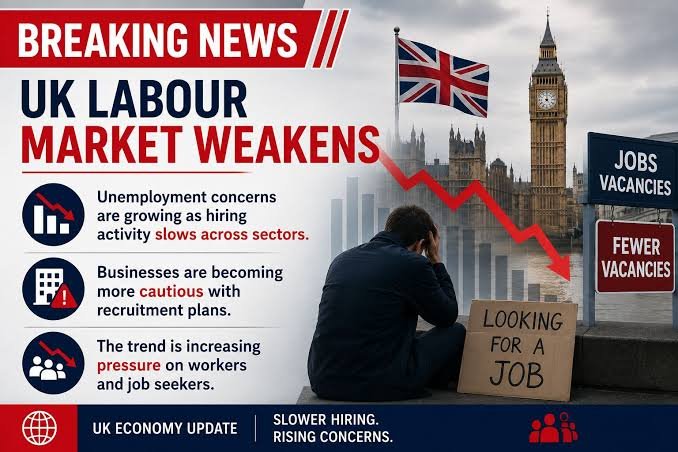
UK Unemployment Rate Forecast to Hit 5.1% in 2027 as 150,000 More Jobs Face Risk
The UK labour market could face further challenges in 2027, with the unemployment rate forecast to rise to 5.1% and around 150,000 additional people potentially losing their jobs.
Economists at the ITEM Club have warned that a sluggish economy could put further pressure on British households as businesses reduce recruitment and struggle with rising operating costs.
According to the forecasters, companies across the UK are likely to become more cautious about hiring as economic conditions remain difficult.
UK Economy Faces a Two-Speed Labour Market
Economists have warned of a growing “two-speed economy”, where some industries continue to expand while others struggle to maintain jobs and business activity.
Hospitality businesses, including hotels and event companies, are among those feeling the pressure. These sectors depend heavily on consumer spending, which has been affected by rising household costs.
Employers are also dealing with higher operating expenses, including increases in the National Living Wage and employer National Insurance contributions.
Meanwhile, growth in other parts of the economy has not generated enough new employment opportunities to offset the slowdown in recruitment.
AI Investment Is Not Yet Creating More Jobs
The ITEM Club’s research highlights continued growth in the IT and professional services sectors, partly driven by increased investment in artificial intelligence.
However, this expansion has not yet translated into a significant increase in recruitment.
Although businesses are investing more in technology and improving productivity, the benefits are not necessarily resulting in more job opportunities for workers.
Unemployment Rate Could Reach 5.1% by Mid-2027
The ITEM Club forecasts that the UK’s unemployment rate could peak at 5.1% by the middle of 2027.
This would represent approximately 150,000 additional people becoming unemployed.
The forecast comes despite a recent improvement in the official unemployment figure, which fell from 4.9% to 4.7% in the three months to August.
However, economists have cautioned that the improvement may not reflect the underlying condition of the labour market, warning that the autumn figures could give a misleading impression of recovery.
Private Sector Salary Growth Expected to Slow
Workers who remain in employment may also face financial pressure as wage growth is expected to weaken.
Economists predict that private sector salary growth could slow from 3.5% in 2026 to around 3% in 2027.
A weaker recruitment market could reduce workers’ bargaining power, making it harder to secure significant pay increases.
It may also become more difficult for employees to move to other organisations in search of better salaries and career opportunities, as fewer employers compete for available talent.
Inflation and Energy Prices Add to Household Pressure
The employment outlook comes amid concerns about rising living costs.
The report points to the possibility of inflation climbing above 4% in early 2027, with higher wholesale fuel prices contributing to pressure on everyday expenses.
Rising energy costs could also affect household bills, adding to the financial challenges facing families across the UK.
Together, slower wage growth, higher living costs and weaker employment opportunities could place additional strain on household budgets.
UK Unemployment Could Recover by 2028
Despite the gloomy short-term outlook, the ITEM Club expects the labour market to gradually improve.
Its forecast suggests that the unemployment rate could return to around 4.7% by the end of 2028.
The anticipated recovery is expected to follow an easing of the current energy price shock and a gradual reduction in inflation.
What This Means for UK Workers and Job Seekers
If the forecast materialises, 2027 could be a challenging year for workers and people seeking employment in the UK.
Businesses may become more selective when recruiting, salary increases could slow, and competition for available vacancies may intensify.
Job seekers may need to remain flexible, strengthen their skills and explore opportunities across different industries.
However, the 5.1% figure remains a forecast rather than a confirmed outcome. The actual direction of the labour market will depend on economic conditions, business confidence, inflation and employers’ recruitment decisions over the coming months.
Join Naija UK Connect
Stay updated with the latest UK visa sponsorship jobs, relocation opportunities, and career guides tailored for Nigerians through Naija UK Connect.
Join here: Naija UK Channel
Also, follow us on our social media channels for the latest updates and discussions:
Twitter: @NaijaUKConnect
Facebook: Naija UK Connect
Instagram: @naijaukconnect