
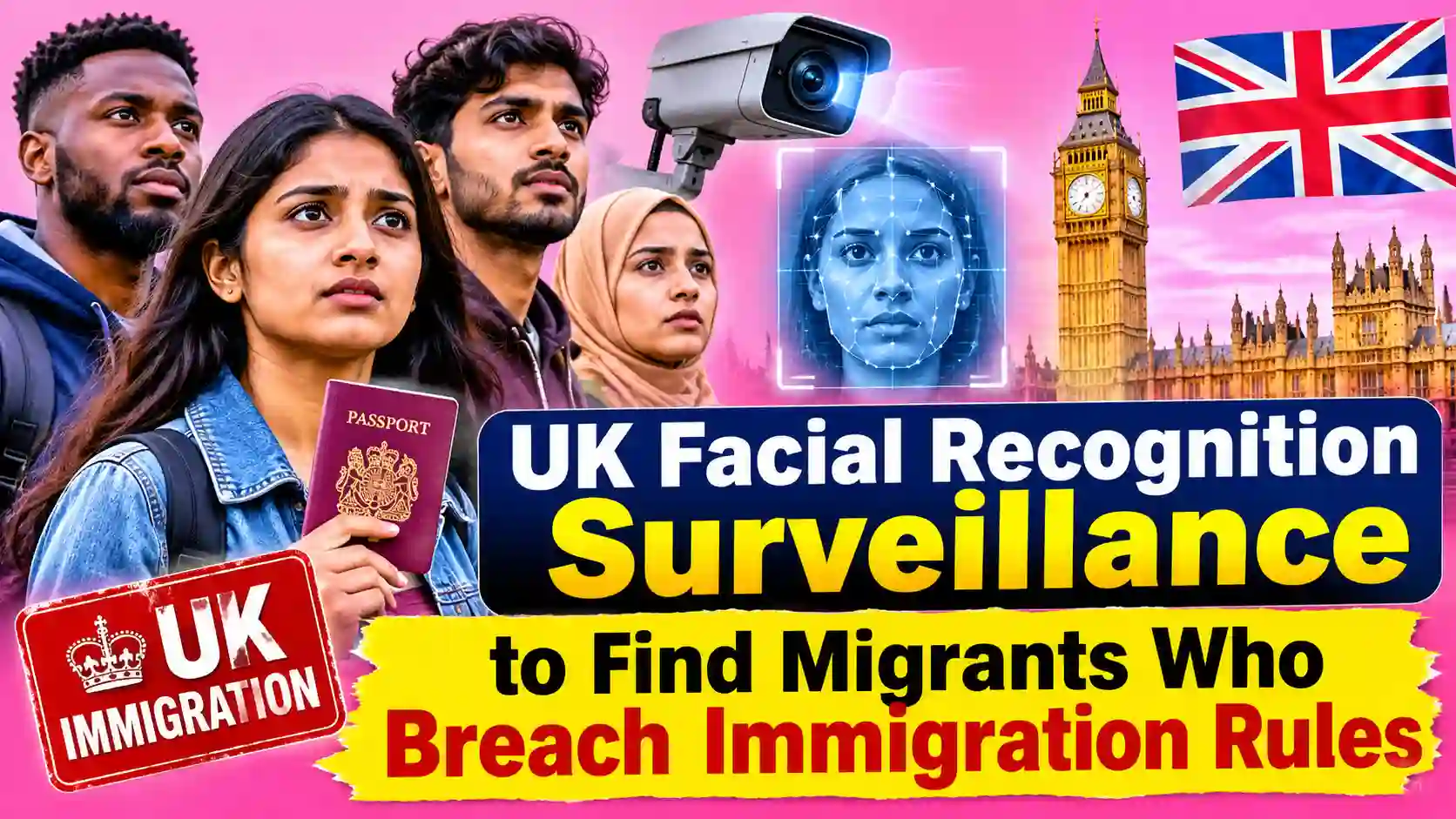
UK Facial Recognition Surveillance 2026: Proposed Immigration Crackdown Raises Concerns for Migrants
The UK government is considering expanding the use of live facial recognition technology as part of efforts to strengthen immigration enforcement and identify people suspected of breaching immigration rules.
The proposed technology could allow immigration authorities to identify visa overstayers, people who have entered the UK illegally, individuals who have breached their visa conditions and those subject to deportation or removal orders.
Under the proposal, facial recognition cameras could be deployed at selected transport hubs, ports, travel routes and major public events. The cameras would scan people’s faces and compare them against photographs held on an approved immigration enforcement watchlist.
The development could mean increased biometric surveillance for migrants living, working or travelling in the UK, including people from Nigeria, India, Pakistan and South Africa.
However, the proposed system is intended to identify individuals already wanted by immigration authorities, rather than target people based on their nationality.
How Would Facial Recognition Identify Immigration Offenders?
The proposed system would work by capturing facial images of people passing through selected locations and comparing them with photographs stored on an immigration enforcement watchlist.
If the software detects a possible match, an alert would be sent to trained officers for further investigation and identity checks.
Importantly, facial recognition technology would not independently establish someone’s identity or determine whether they have broken immigration laws.
A potential match would not automatically result in someone being stopped, arrested, detained or deported. Officers would need to carry out additional checks before deciding whether enforcement action was appropriate.
The Home Office has indicated that the technology would be used for targeted immigration enforcement rather than general or speculative surveillance.
Facial Recognition Trials at UK Ports
The proposed expansion follows facial recognition trials conducted at Holyhead Port in North Wales between November 2025 and February 2026.
According to reports by Punch, the trials examined whether the technology could help identify people travelling from Ireland who were subject to deportation orders or wanted in connection with immigration-related criminal offences.
Following these trials, the programme reportedly progressed beyond its initial proof-of-concept stage towards a pilot exercise.
The Home Office is now considering whether the technology could be introduced at additional locations.
However, no confirmed timetable has been announced for a nationwide rollout.
If expanded, the system could provide immigration enforcement officers with another tool for identifying individuals already subject to immigration proceedings.
Who Could Be Affected by the Proposed Surveillance System?
The proposed technology could be particularly relevant to migrants whose immigration status has expired or who are already subject to enforcement action.
People who could potentially appear on immigration enforcement watchlists include:
- Individuals who have overstayed their UK visas.
- People who entered the UK illegally.
- Migrants who have breached the conditions attached to their visas.
- Individuals subject to deportation or removal orders.
- People wanted by immigration authorities in connection with relevant offences or outstanding warrants.
For migrants from Nigeria, India, Pakistan and other countries with significant communities in the UK, the proposal raises questions about how immigration enforcement will operate in public spaces.
Nevertheless, being photographed by a facial recognition camera does not automatically mean someone has committed an immigration offence.
The proposed technology would not, by itself, change existing visa conditions, immigration laws or the legal procedures governing deportation and removal.
Any enforcement action would still need to follow the applicable legal processes.
Privacy and Human Rights Concerns
The potential expansion of facial recognition technology has raised concerns among privacy campaigners and migrant rights organisations.
One of the main issues is the collection and processing of biometric information in public spaces, particularly when individuals may not know that their faces are being scanned.
The Joint Council for the Welfare of Immigrants has raised concerns about the use of facial recognition in immigration enforcement, while the Open Rights Group has questioned whether there will be sufficient transparency, public consultation and independent oversight.
Questions have also emerged about the regulatory framework governing the proposed technology.
Liberty Investigates has reported concerns surrounding the role of the Biometrics and Surveillance Camera Commissioner, William Webster, who indicated that he had not been briefed on the immigration policy. He also told MPs that facial recognition used specifically for immigration enforcement fell outside his remit.
These developments have prompted further questions about who will independently monitor the system and ensure that it is used lawfully.
Critics have also compared the proposed expansion with wider facial recognition surveillance systems used in countries such as China, where biometric monitoring has attracted international criticism over privacy, discrimination and human rights.
Amnesty International has similarly raised concerns about the potential misuse of biometric surveillance technologies, particularly where they could contribute to discriminatory practices or mass surveillance.
Meanwhile, the UK government has defended the wider use of facial recognition technology by law enforcement agencies.
Home Secretary Shabana Mahmood has described the technology as a major breakthrough in helping police identify criminals, while emphasising that its use must be fair, safe and appropriate.
One safeguard reportedly being considered is a restriction preventing anyone under the age of 18 from being placed on facial recognition watchlists.
Why Nigerian, Indian and Pakistani Communities Are Paying Attention
The proposal is particularly significant for migrant communities from Nigeria, India and Pakistan, which are among the major non-EU countries of origin for people migrating to the UK.
Office for National Statistics figures for the year ending June 2025 identified India as the leading non-EU nationality for long-term immigration to the UK, with Pakistan and Nigeria also among the prominent countries of origin.
As a result, developments in UK immigration enforcement are likely to attract considerable attention from these communities.
However, the proposed facial recognition programme is not designed to single out particular nationalities.
Its stated purpose is to help authorities identify individuals already subject to immigration enforcement action, including people with deportation orders, outstanding warrants or unresolved immigration cases.
For Nigerians and other migrants living in the UK, understanding the distinction between immigration enforcement and nationality-based targeting is important.
The proposal also highlights the growing role of biometric technology in the UK’s approach to border security and immigration control.
Is the UK Planning a Nationwide Facial Recognition Rollout?
As of November 2026, the Home Office has not announced a confirmed date or specific locations for a nationwide rollout of the proposed immigration facial recognition system.
Several important details also remain unclear, including:
- How long captured facial images and biometric information would be retained.
- What safeguards would prevent misuse of personal data.
- How incorrect facial recognition matches would be investigated and corrected.
- What independent oversight would apply to the system.
- How members of the public would be informed about its use in selected locations.
Following the trials at Holyhead Port, the programme remains at the pilot and development stage, with wider deployment still under consideration.
What Migrants in the UK Should Know
The proposed expansion of facial recognition technology represents another potential development in the UK’s immigration enforcement system.
If introduced more widely, it could give immigration authorities an additional way to identify people who have overstayed their visas, breached immigration conditions or become subject to deportation proceedings.
However, a facial recognition match is not proof of an immigration offence, and being captured on camera does not automatically make someone liable for arrest or removal.
Migrants should continue to ensure that their immigration status is valid, comply with the conditions of their visas and seek qualified immigration advice if they are concerned about their circumstances.
For now, the proposed system is still under consideration, and important questions about privacy, data protection, accuracy and independent oversight remain unanswered.
Naija UK Connect will continue to follow developments in UK immigration policy and share updates that matter to Nigerians and other migrant communities living in Britain.
Join Naija UK Connect
Stay updated with the latest UK visa sponsorship jobs, relocation opportunities, and career guides tailored for Nigerians through Naija UK Connect.
Join here: Naija UK Channel
Also, follow us on our social media channels for the latest updates and discussions:
Twitter: @NaijaUKConnect
Facebook: Naija UK Connect
Instagram: @naijaukconnect