
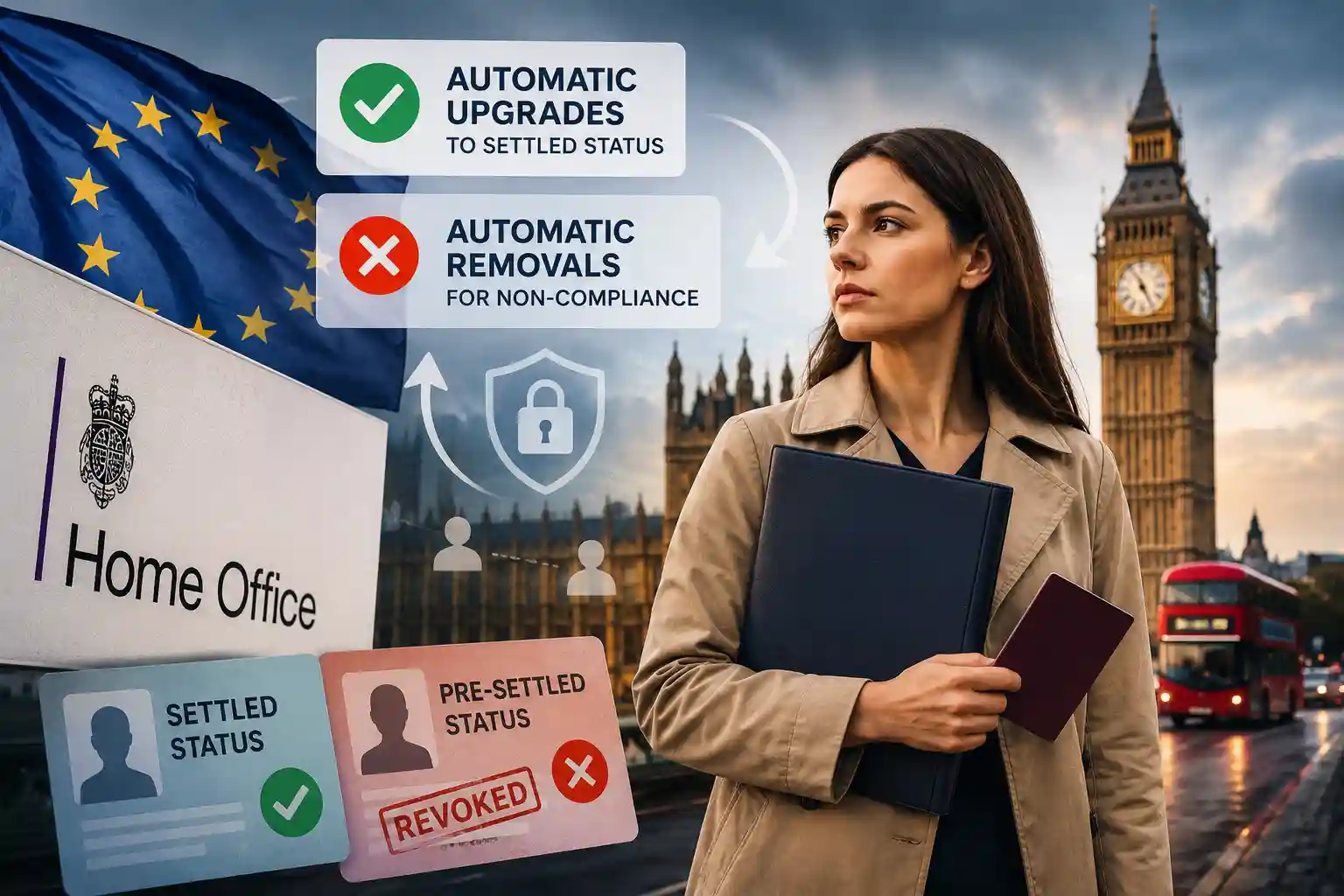
UK ETA and EU Settlement Scheme: Key Immigration Updates for 2026
Published: 16 October 2026
The UK’s immigration system continues to evolve as the government expands digital border controls and updates guidance for people covered by the EU Settlement Scheme (EUSS). The latest developments highlight important considerations for European residents, family members, employers and international mobility teams.
On 15 October 2026, UK Visas and Immigration (UKVI) issued version 33 of its caseworker guidance for the EU Settlement Scheme. The update references the latest Statement of Changes to the Immigration Rules, HC 584, which took effect on 8 October 2026.
The changes and accompanying guidance address digital immigration status, eVisas, Electronic Travel Authorisation (ETA) requirements and the position of people who have applied to the EUSS but are still waiting for a decision.
1. EU Settlement Scheme Applicants and UK ETA Rules
One of the key points highlighted in the updated guidance concerns people who have applied to the EU Settlement Scheme but have not yet received a decision.
These applicants may hold a Certificate of Application (CoA), which confirms that an EUSS application has been submitted. According to the supplied report, eligible non-visa nationals holding a CoA are generally not required or eligible to obtain an ETA solely on the basis of their pending EUSS application.
This distinction matters because the ETA system applies to certain travellers who do not normally need a visa for short visits to the UK. It is not a replacement for immigration permission under the EU Settlement Scheme.
Travellers should check their individual circumstances and the latest official guidance before travelling, particularly if their application remains pending.
2. Certificates of Application and Travel to the UK
A Certificate of Application can provide evidence that an individual has applied to the EU Settlement Scheme. Depending on the circumstances, it may also support their ability to demonstrate relevant rights while their application is being considered.
The report states that carriers may need to recognise valid Certificates of Application when checking passengers’ permission to travel. Travellers may also need to present appropriate documentation to Border Force officers on arrival.
However, the precise evidence required can depend on the person’s circumstances and the current rules. A CoA should not automatically be treated as a universal travel document or as a guarantee of entry to the UK.
Anyone planning a journey while waiting for an EUSS decision should check the latest Home Office guidance and confirm the documentation required before departure.
3. Digital Immigration Status and eVisas
The UK is continuing to move towards a more digital immigration system. Electronic immigration records are increasingly important for demonstrating a person’s permission to enter, stay or work in the country.
For people with EUSS status, keeping digital records accurate and accessible can help reduce problems when travelling or proving their immigration status.
Employers, relocation teams and travel providers should ensure that employees understand how to access and demonstrate their immigration status. They should also avoid assuming that every traveller follows the same process, as requirements vary according to nationality, immigration status and the purpose of travel.
4. Changes Affecting Family Members
The updated guidance also reportedly addresses evidence requirements for certain family members applying under the EU Settlement Scheme, including connecting family members.
Applicants should ensure that they provide the appropriate supporting documents and respond promptly if further information is requested.
The Home Office may seek additional evidence where an application contains gaps or requires clarification. Applicants should nevertheless pay close attention to any deadlines and instructions provided in correspondence about their individual case.
Because family relationships and eligibility routes differ, anyone unsure about the evidence required should consult the relevant official guidance or seek qualified immigration advice.
5. Continuous Residence and Absences From the UK
Continuous residence remains an important consideration for people seeking or maintaining status under the EU Settlement Scheme.
The report highlights updated guidance concerning breaks in continuous residence and extended periods spent outside the UK. Depending on the applicable rules and an individual’s circumstances, absences may affect eligibility for settled status or other rights under the scheme.
Employers relocating European employees and people who travel internationally for extended periods should review their travel histories and understand how absences may affect their immigration position.
It is important not to assume that every absence leads to a loss of status. The relevant rules depend on factors including the person’s circumstances, the dates involved and any applicable exceptions.
6. What Employers and Global Mobility Teams Should Do
Employers supporting European employees in the UK should review their internal immigration and relocation procedures in light of the latest guidance.
Practical steps include:
- Checking employees’ immigration status and ensuring records are accurate.
- Helping staff understand how to access their digital immigration documents.
- Reviewing travel arrangements for employees with pending EUSS applications.
- Avoiding automatic ETA reminders where an employee’s immigration status means the standard ETA process may not apply.
- Encouraging employees to check official requirements before international travel.
- Keeping records of relevant immigration documents and correspondence, in line with data protection obligations.
Travel agencies and HR platforms may also need to review automated travel notifications so that passengers receive information appropriate to their immigration status.
7. What Travellers Should Know
If you have applied to the EU Settlement Scheme, hold a Certificate of Application or already have EUSS status, do not assume that the same ETA rules apply to everyone.
Before travelling, check:
- Whether your nationality requires a visa or an ETA for your particular journey.
- Whether you have valid immigration permission or a pending EUSS application.
- Which documents you must present to your carrier and at the UK border.
- Whether any absences from the UK could affect your immigration status.
- Whether you need to take further action to access or update your digital immigration record.
The most appropriate steps will depend on your personal circumstances and the immigration rules in force at the time of travel.
Conclusion: Stay Updated on UK Immigration Changes in 2026
The latest EU Settlement Scheme guidance highlights the growing importance of digital immigration records and the need to understand how ETA requirements interact with existing immigration rights.
For EUSS applicants, European residents, employers and international travellers, the key message is to check the rules that apply to their specific circumstances rather than relying on general travel advice.
As the UK continues to develop its digital border system, keeping immigration documents up to date and confirming travel requirements before departure can help reduce avoidable complications.
Important: This article is based on the information supplied about the reported October 2026 guidance update. Readers should verify the details against current GOV.UK guidance and the official Statement of Changes to the Immigration Rules before making immigration or travel decisions.
Join Naija UK Connect
Stay updated with the latest UK visa sponsorship jobs, relocation opportunities, and career guides tailored for Nigerians through Naija UK Connect.
Join here: Naija UK Channel
Also, follow us on our social media channels for the latest updates and discussions:
Twitter: @NaijaUKConnect
Facebook: Naija UK Connect
Instagram: @naijaukconnect