The Significance of Quality Education in a Developing Country
Quality education has the power to transform lives, strengthen communities and create lasting opportunities for future generations. For children growing up in underserved communities, access to high-quality education can be the difference between remaining trapped in poverty and gaining the skills, confidence and opportunities needed to build a better future.
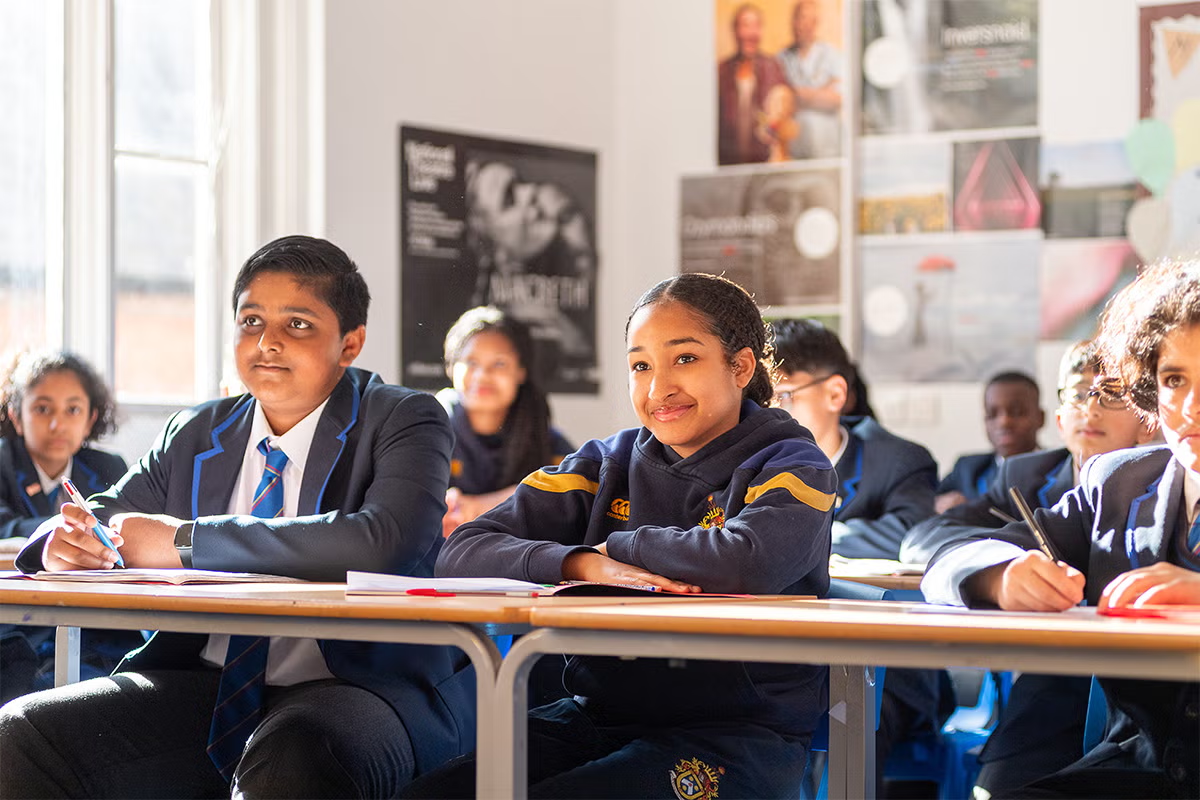
In developing countries, education remains one of the most powerful tools for addressing poverty, inequality and social exclusion. However, access alone is not enough. Children need safe learning environments, well-trained teachers, relevant educational resources and the support necessary to develop academically, socially and emotionally.
When education is delivered to a high standard, it can become a powerful pathway to economic independence, social mobility and national development.
Why Quality Education Matters
Quality education goes far beyond teaching children how to read, write and perform basic calculations. It equips young people with knowledge, critical-thinking skills, confidence and values that can help them navigate life and contribute positively to their communities.
1. Education Supports Economic Growth
A well-educated population is essential for building a productive and innovative workforce.
Quality education gives children and young people the skills they need to pursue further education, enter the workforce and adapt to changing economic conditions. Better education can increase employment opportunities, improve earning potential and enable individuals to contribute more effectively to their local economies.
At a national level, investment in education can help create a skilled workforce capable of driving innovation, entrepreneurship and sustainable economic growth.
2. Education Helps Reduce Inequality
Education can provide children from disadvantaged backgrounds with opportunities that might otherwise be unavailable to them.
For children growing up in poverty, a quality education can open doors to higher education, employment and economic independence. It can also promote social mobility by giving students the knowledge and skills required to compete for opportunities based on their abilities rather than their socioeconomic background.
However, achieving this requires education systems to address the barriers that prevent disadvantaged children from accessing and completing school.
3. Education Improves Health and Well-Being
Education also has a significant impact on health.
People with greater access to education are often better equipped to understand health information, recognise risks, make informed decisions and access appropriate healthcare services.
For children and families in underserved communities, education can therefore contribute to better health outcomes, improved awareness and greater confidence in making decisions that affect their well-being.
4. Education Empowers Women and Girls
Quality education is particularly important in advancing opportunities for women and girls.
When girls have access to education, they can develop the skills and confidence needed to participate more fully in economic and social life. Education can increase opportunities for employment and entrepreneurship while helping women make informed decisions about their health, families and futures.
Educating girls can also have benefits that extend beyond the individual, influencing families and communities for generations.
The Challenges of Delivering Quality Education
Despite the enormous benefits of education, many developing countries continue to face significant challenges in providing high-quality learning opportunities to every child.
Limited funding can result in overcrowded classrooms, inadequate school infrastructure, shortages of learning materials and insufficient access to technology.
Teachers may also face challenges, including limited professional development opportunities, large class sizes and inadequate resources to support different learning needs.
For some children, the barriers are even greater.
Poverty, child labour, gender discrimination, limited access to transportation and other social and economic pressures can make it difficult for children to attend school consistently or complete their education.
In some communities, families may have to choose between sending children to school and meeting immediate household needs.
Addressing these challenges requires long-term investment and collaboration between governments, communities, educators, charities, businesses and other organisations.
Investing in Teachers and Schools
Teachers are at the heart of every successful education system.
Providing educators with appropriate training, resources and ongoing professional development can improve the quality of teaching and help schools respond more effectively to students’ individual needs.
Investment in school infrastructure is equally important. Children need safe and supportive environments where they can learn, participate and develop without unnecessary barriers.
Technology can also play an increasingly important role, particularly where digital learning can complement traditional classroom education.
However, technology should be viewed as a tool rather than a replacement for teachers. Sustainable progress requires a combination of skilled educators, effective leadership, appropriate resources and community involvement.
The Role of Communities and Partnerships
Improving education in developing countries cannot be achieved by schools alone.
Parents, caregivers and local communities play an important role in creating an environment where children are encouraged to learn and pursue their ambitions.
Partnerships between governments, private organisations and non-profit institutions can also help expand access to educational opportunities and provide resources that schools and communities may otherwise struggle to obtain.
These partnerships can support teacher development, infrastructure improvements, health programmes, character development and other initiatives that contribute to children’s overall well-being.
Christel House’s Commitment to Quality Education
Christel House is one organisation working to expand educational opportunities for children from under-resourced communities.
For more than 25 years, Christel House has provided high-quality, no-fee education to more than 20,000 students through schools across multiple countries. Its approach goes beyond traditional academic instruction, incorporating areas such as health and social services, character and leadership development, parent and caregiver engagement, and college and career preparation.
The organisation’s broader approach recognises that children need more than classroom lessons to succeed.
Students also need support that helps them develop confidence, character, healthy relationships, leadership skills and the ability to make positive decisions about their futures.
By combining education with wider support systems, Christel House aims to help students overcome socioeconomic barriers and prepare for long-term success.
Expanding the Model Through the Global Pathbuilders Fellowship
As part of its efforts to expand its education model, Christel House has established the Global Pathbuilders Fellowship, an intensive, two-year, fully paid leadership programme designed to identify visionary leaders capable of launching new Christel House schools.
The programme is focused on six countries: Ghana, Kenya, Colombia, Peru, Nepal and Bangladesh. Selected fellows receive time, resources, strategic guidance and financial support to develop plans for establishing new schools in their countries.
The fellowship is designed for experienced leaders and social entrepreneurs who are committed to improving outcomes for children and families living in low-income communities.
Candidates are expected to have at least 10 years of professional experience, including a minimum of five years of leadership experience in either the social impact sector or private sector. Christel House also looks for candidates with entrepreneurial ability, fundraising experience and a strong commitment to educational excellence.
From Fellowship to School Leadership
The Global Pathbuilders Fellowship is designed to provide participants with practical experience in educational leadership and the resources required to establish a new school.
During the first year, fellows spend time at Christel House International headquarters in Indianapolis and at existing Christel House schools. They learn about the organisation’s model, develop relationships with colleagues and begin building networks in their home countries.
They then return to their countries to establish local partnerships, develop networks, form local boards and begin creating strategic and operational plans for their proposed schools.
The second year focuses on implementation and launch preparation. Fellows work on securing locations, mobilising resources and funding, strengthening community partnerships and refining their operational strategies.
Ultimately, fellows present their plans to the Christel House International Board for approval, with the goal of opening new schools. Successful fellows can transition into the role of Chief Executive Officer of Christel House in their country, overseeing areas such as fundraising, partnerships, operations and organisational leadership.
Building More Than Academic Success
The importance of quality education extends beyond examination results.
A strong education system should help children become confident, responsible and capable individuals who can participate meaningfully in society.
This means creating opportunities for students to develop communication skills, critical thinking, leadership abilities, resilience and a sense of responsibility towards others.
For children from disadvantaged communities, these opportunities can be particularly transformative.
When students are given access to quality education and the support they need to succeed, they can begin to imagine possibilities beyond the circumstances into which they were born.
Education as a Pathway Out of Poverty
Poverty can create a cycle that is difficult for families to break.
Children born into low-income households may have fewer educational opportunities, which can limit their future employment prospects and earning potential. This can contribute to the continuation of poverty from one generation to the next.
Quality education can help interrupt that cycle.
By equipping children with knowledge, practical skills, confidence and access to further opportunities, education can provide a pathway towards greater economic independence.
The impact can extend beyond individual students. Educated and empowered graduates can contribute to their families, communities and wider economies.
Creating Sustainable Change Through Education
The long-term impact of education becomes even greater when educational programmes are designed around the realities of the communities they serve.
Schools need to understand local challenges, work with families and develop solutions that can be sustained over time.
This is why initiatives that combine education with health, character development, family engagement and career preparation can play an important role in supporting children from underserved communities.
Christel House’s model reflects this broader approach by seeking to prepare students not only for academic achievement but also for successful and meaningful lives beyond school.
Empowering Leaders to Expand Educational Opportunities
The Global Pathbuilders Fellowship represents another dimension of this work: empowering experienced leaders to become catalysts for educational transformation in their own countries.
Rather than simply expanding schools, the programme aims to develop leaders who can build partnerships, raise funds, establish teams and create sustainable institutions serving children experiencing poverty.
Fellows receive mentorship, financial resources, access to educational experts and connections to the wider Christel House network as they work towards establishing new schools.
This type of leadership development can help create a multiplier effect, allowing one organisation to reach more communities while developing local leadership capacity.
A Shared Responsibility
Providing quality education in developing countries is a shared responsibility.
Governments must prioritise education in national development plans. Schools need strong teachers and effective leadership. Communities need to support children’s learning. Businesses and private organisations can contribute resources and expertise, while non-profit organisations can help reach communities facing the greatest barriers.
Most importantly, children must remain at the centre of these efforts.
Every child deserves the opportunity to learn in a safe environment, develop their abilities and imagine a future that is not limited by poverty or circumstance.
Join the Global Pathbuilders Fellowship
For experienced leaders who want to contribute to educational transformation, Christel House’s Global Pathbuilders Fellowship offers an opportunity to help establish new schools and expand access to quality education.
The programme is aimed at experienced social entrepreneurs and leaders with a strong commitment to improving outcomes for children and families in underserved communities.
Through the fellowship, selected leaders receive structured training, mentorship, financial support and access to a global network as they work towards launching new Christel House schools.
Learn more about the Global Pathbuilders Fellowship and the current programme requirements:
Christel House Global Pathbuilders Fellowship
The Future Begins With Quality Education
Quality education is more than a pathway to employment. It is an investment in people, families, communities and the future of entire nations.
For developing countries facing poverty and inequality, improving education can create opportunities that extend far beyond the classroom.
When children are given access to quality teaching, supportive environments and the tools they need to succeed, they can become the professionals, entrepreneurs, leaders, educators and community builders who shape the next generation.
Education can change an individual’s future — and when enough lives are transformed, it can change an entire community.
Join Naija UK Connect
Stay updated with the latest UK visa sponsorship jobs, relocation opportunities, and career guides tailored for Nigerians through Naija UK Connect.
Join here: Naija UK Channel
Also, follow us on our social media channels for the latest updates and discussions:
Twitter: @NaijaUKConnect
Facebook: Naija UK Connect
Instagram: @naijaukconnect