
NHS Rolls Out Home HPV Self-Testing Kits for Millions of Women in England
The NHS in England is beginning a major rollout of HPV self-testing kits aimed at helping millions of women who are not up to date with their cervical screening.
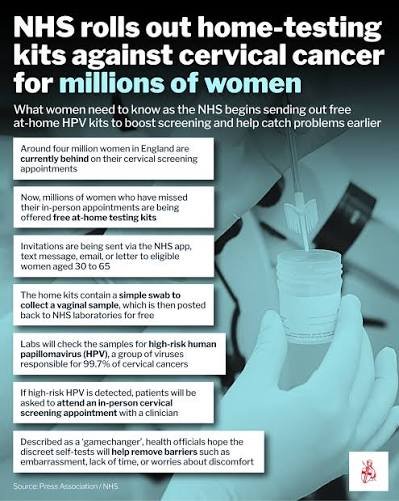
Nearly 4 million women who have previously been invited for cervical screening but have not attended will be offered the opportunity to use a free HPV self-testing kit at home.
The new approach is designed to make cervical screening more convenient and discreet, potentially helping more people take part and supporting the NHS goal of eliminating cervical cancer by 2040.
What Is the New HPV Self-Test?
The HPV self-testing kit contains a simple vaginal swab, similar to a long cotton bud.
Those who receive an invitation can use the swab at home to collect a sample and then return it to the NHS free of charge. The sample will be tested for high-risk types of human papillomavirus (HPV), a common virus that can cause changes to cells in the cervix.
If high-risk HPV is detected, the individual will be asked to attend a follow-up cervical screening appointment at their GP surgery or sexual health clinic.
During the follow-up appointment, a healthcare professional can take a sample from the cervix to check for abnormal cell changes.
Who Will Be Offered the Home Testing Kits?
The HPV self-testing programme is being introduced gradually across England.
The initial rollout will focus on people aged 30 to 65 who have not attended cervical screening after previous NHS invitations.
Eligible women will receive invitations through channels such as:
- NHS App
- Text message
- Letter
Once invited, they will be able to order a free self-testing kit through the NHS App or their NHS online account.
The home test is currently an invitation-only service, so people should not assume they can order a kit without receiving an invitation.
Why Is the NHS Introducing Home HPV Testing?
Cervical screening can prevent cervical cancer by detecting high-risk HPV and identifying cell changes before they develop into cancer.
However, many eligible women do not attend their screening appointments.
The latest figures cited by NHS England show that 68.8% of eligible women were up to date with cervical screening, below the NHS target of 80%. This means around 4 million women in England are not currently up to date.
There are many reasons people may delay screening, including embarrassment, concerns about discomfort, difficulty finding time and practical challenges around booking appointments.
The new self-testing option is intended to reduce some of these barriers.
Dr Sue Mann, National Clinical Director for Women’s Health at NHS England, described the home-testing option as a potential “gamechanger”, saying it could provide a more discreet and convenient way for women to test for HPV.
Home HPV Testing Is an Additional Choice
The new self-testing kits are not replacing traditional cervical screening appointments.
Women who regularly attend cervical screening with a nurse or doctor should continue to attend their appointments as normal.
Clinician-led cervical screening remains an important part of preventing cervical cancer. The self-testing option is being introduced as an additional choice for people who have not responded to previous screening invitations.
Anyone who has already received a cervical screening invitation can still arrange an appointment, even if the invitation was sent months or years ago.
What About the HPV Vaccine?
Being vaccinated against HPV does not mean that cervical screening is no longer necessary.
The HPV vaccine protects against several types of HPV but does not provide protection against every type that can potentially cause cervical cancer.
Therefore, eligible people should continue to participate in cervical screening even if they have received the HPV vaccine.
Evidence Behind the New Programme
The national rollout follows evidence from the YouScreen trial, conducted in North London in 2021 by cancer alliances in collaboration with NHS England and King’s College London.
The trial found that offering HPV self-testing kits to women who were behind with screening, either at their GP practice or at home, could significantly increase screening participation.
The evidence contributed to the UK National Screening Committee’s recommendation to expand HPV self-testing more widely.
NHS Target: Eliminate Cervical Cancer by 2040
The introduction of home HPV testing forms part of the NHS’s wider ambition to eliminate cervical cancer as a public health problem in England by 2040.
The strategy includes improving access to HPV vaccination and increasing participation in cervical screening.
The NHS hopes that making testing more convenient will encourage more people who have previously delayed or avoided screening to take part.
A Personal Story: How Screening Can Save Lives
Dawn Bryant, 62, from Hertfordshire, has spoken about how cervical screening helped detect cancerous cell changes at an early stage.
She was diagnosed after a screening test identified severe high-grade cell changes. Further testing confirmed cancer, but because it was detected early, she was able to receive treatment without needing chemotherapy or radiotherapy.
Her experience has encouraged other women not to delay screening.
She has also highlighted the importance of seeking professional advice if someone is worried about the screening process or has questions about their results.
What Should Women Do?
If you receive an NHS invitation for cervical screening or an HPV self-testing kit, consider taking up the opportunity.
If you are invited to use the home HPV test:
- Order your free kit through the NHS App or your NHS online account.
- Follow the instructions provided with the kit.
- Collect the sample using the supplied swab.
- Return the sample to the NHS using the free return service.
- Follow any further instructions if high-risk HPV is detected.
If you have already been invited for traditional cervical screening, you can still arrange an appointment with your GP surgery or an appropriate sexual health service.
Frequently Asked Questions
What is HPV?
Human papillomavirus (HPV) is a very common virus. Certain high-risk types can cause changes to cells in the cervix that may eventually develop into cervical cancer.
Does the home HPV test replace cervical screening?
No. The NHS is introducing self-testing as an additional option for people who have not attended previous screening invitations. Traditional clinician-led screening remains available and important.
Is the HPV self-test free?
The NHS is offering the self-testing kits free of charge to people who are eligible and receive an invitation.
Can everyone order a home HPV test?
No. The programme is being rolled out in phases and is currently invitation-only. The initial rollout focuses on people aged 30 to 65 who are not up to date with cervical screening.
Should vaccinated women still attend cervical screening?
Yes. HPV vaccination does not protect against every type of HPV that can cause cervical cancer, so eligible people should continue to attend screening.
Final Thoughts
The NHS’s rollout of free HPV self-testing kits could make cervical screening more accessible for millions of women who have struggled to attend appointments.
For those who receive an invitation, the home test offers a convenient way to take an important step towards detecting high-risk HPV.
However, home testing does not replace routine cervical screening for everyone. Eligible people should continue to follow NHS screening recommendations and attend appointments when invited.
Early detection and prevention remain key to the NHS’s ambition to eliminate cervical cancer by 2040.
Disclaimer
This article is for general information only and does not replace medical advice. NHS screening eligibility, testing arrangements and guidance may change. Always follow the instructions provided by the NHS and speak with a qualified healthcare professional if you have questions or concerns about cervical screening or HPV.
Join Naija UK Connect
Stay updated with the latest UK visa sponsorship jobs, relocation opportunities, and career guides tailored for Nigerians through Naija UK Connect.
Join here: Naija UK Channel
Also, follow us on our social media channels for the latest updates and discussions:
Twitter: @NaijaUKConnect
Facebook: Naija UK Connect
Instagram: @naijaukconnect