
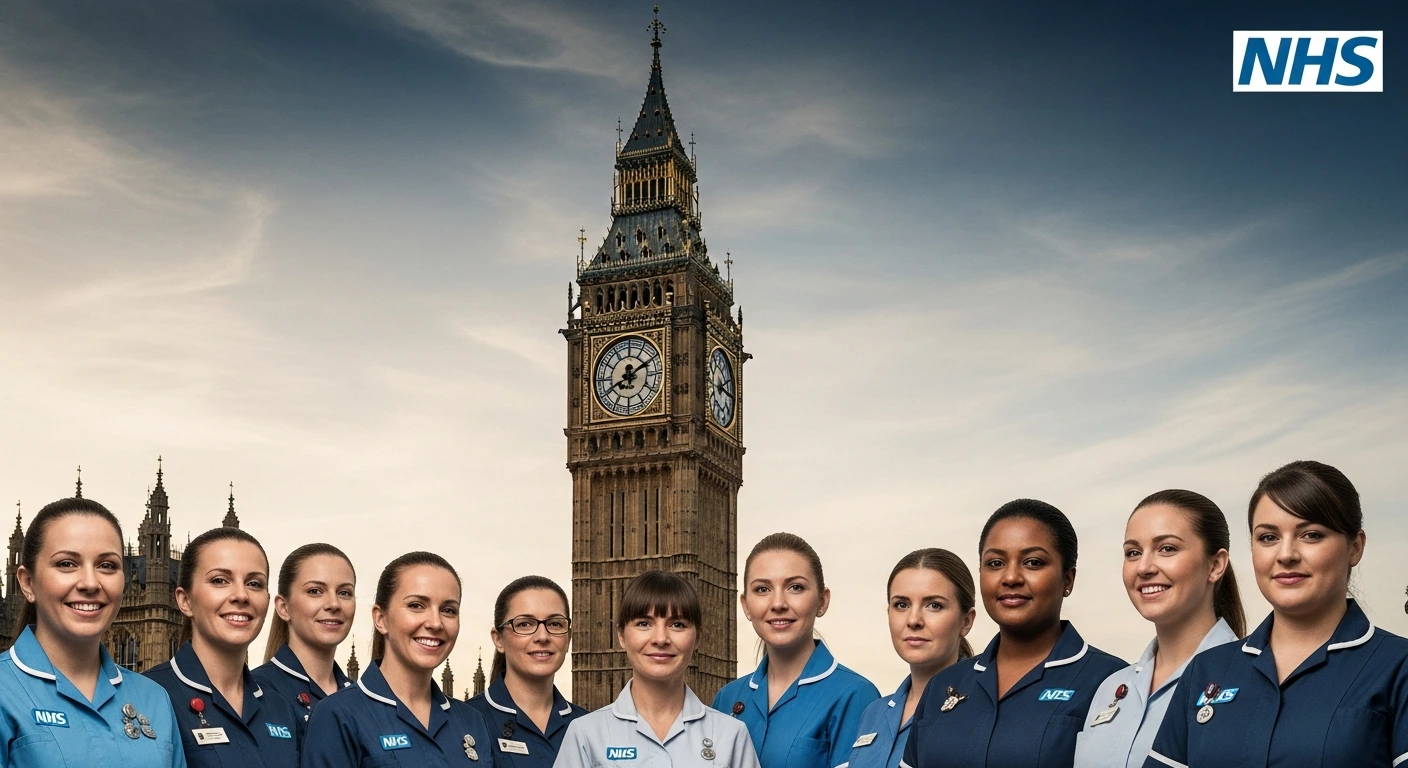
Looking for a stable UK job with visa sponsorship? Thinking of building a long-term career in health care? This guide shows you how to land a job with the NHS, what roles are in demand, how the pay works — and how you, as a Nigerian or other international applicant, can get started in 2025.
Why Many Nigerians in the UK Search for NHS Jobs
- The NHS is the UK’s biggest employer — meaning many job opportunities across many types of work.
- You want a job that gives purpose, stability and opportunities to grow — not just a pay-cheque. With the NHS you get all that.
- For internationals, the chance at visa sponsorship is a big plus. You may be able to work legally, even if you don’t currently have “right to work.”
We built this guide to make the process less confusing — so you know where to begin, what to expect, and how to get ahead.
What is NHS England — and Who Can Work There
NHS England isn’t just hospitals. It includes community health, clinics, labs, admin offices, support services — so if you have pretty much any kind of professional skill, there’s a place for you.
By March 2025, there were more than 1.54 million staff in NHS hospital & community services across England. The system keeps expanding — and they’re constantly hiring.
That means good opportunities now for newcomers, career changers, or people looking to start fresh.
Types of NHS Jobs — Clinical vs Non-Clinical
Clinical Jobs
These are roles that involve working directly with patients. Examples:
- Doctors, nurses, midwives, paramedics
- Allied Health Professionals (AHPs) — physiotherapists, radiographers, dietitians, etc.
- Healthcare Scientists — lab workers, technicians, diagnostic support
These jobs usually require formal qualifications or professional registration.
Non-Clinical / Support & Admin Jobs
Here the work doesn’t involve direct medical treatment, but is still key to keeping the NHS running. Examples:
- Admin, reception, medical secretaries, scheduling, coding
- IT, data/ digital roles, project support, HR, finance
- Estates, cleaning, support services, clerical work
If you’re switching careers — or don’t have a medical qualification — non-clinical roles are often easier to start with, and can still lead to growth.
Popular Entry & In-Demand Roles
Here are some categories where the NHS often hires, and where many new starters find their first UK job:
- Administrative support (receptionist, medical secretary, clinical coding, patient-pathway coordination)
- Support roles like Healthcare Assistant (HCA), Nursing-Associate positions
- IT / Digital / Data / Project-management support in NHS trusts
- Allied Health & support-staff roles: lab assistants, technicians, admin-support for clinics etc.
These jobs are often among the most available — and many don’t require previous UK work history.
Salary Bands at NHS England (2025)
Here’s a quick look at typical NHS pay bands (pre-tax), to help you know what to expect. (GOV.UK)
| Band | Role Examples / Entry Level | Approx. Annual Pay* |
|---|---|---|
| Band 3 | Junior admin, support staff, basic roles | ~ £24,000 – £26,000 (GOV.UK) |
| Band 4 | Specialist admin, some support roles | ~ £26,500 – £30,000 (GOV.UK) |
| Band 5 | Qualified nurse / entry-level clinical staff / allied health | ~ £30,000 – £38,000 (GOV.UK) |
| Band 6 | Specialist nurse / junior ward manager / experienced role | ~ £37,000 – £46,000 (GOV.UK) |
| Band 7 | Senior clinical/admin role or managerial | ~ £46,000 – £55,000+ (GOV.UK) |
*Note: Some roles (especially in London or high-cost areas) may attract extra allowances/supplements to help cover living costs.
Visa Sponsorship — Can NHS Sponsor You (from Nigeria or Non-UK)? ✅
Yes — many roles at NHS England are eligible for visa sponsorship, but there are some conditions.
- The NHS and other approved UK health or care employers can sponsor through the Health and Care Visa or the general Skilled Worker Visa routes. (GOV.UK)
- To qualify, the job must meet certain salary and skill thresholds. For many NHS roles on their national pay scale, the minimum salary threshold is £25,000 per year under Health and Care visa rules. (NHS Employers)
- When the role and employer qualify, the NHS (or employer trust) issues a “Certificate of Sponsorship (CoS)” — this is required to apply for the visa. (NHS England Medical Hub)
- Overseas-qualified healthcare professionals are encouraged to apply — the NHS routinely recruits globally. (NHS Jobs)
That means if you’re in UK already, or coming from abroad, and you get a valid NHS job offer that meets requirements — you can use it to get a visa.
⚠️ Important to note: Some lower-paid roles (especially certain Band 2 or very basic support/admin) may not meet visa sponsorship thresholds. Recent reporting warns that certain lower paid staff may face visa renewal problems under stricter immigration rules. (The Royal College of Nursing)
So before applying — always check whether the job advert says “visa sponsorship available” or “sponsor licence employer.”
Career Growth & Long-Term Opportunities with NHS
Working with the NHS isn’t just a job — it can be a long-term career path. Some benefits:
- Clear promotion pathways: many start in support/admin roles, then move up (through training, internal programs, apprenticeships).
- If you’re already qualified (or upgrade), you might move into clinical or higher-skilled roles.
- For technical or digital workers: there are often trainee, project and management-track posts.
- For many, being part of a large, stable employer with pension scheme, benefits, and a multicultural workforce — including many Nigerians and people from other African countries — gives security and community.
How to Apply — Your Checklist
- Visit official NHS jobs websites (or equivalent) and filter for roles that say “visa sponsorship available”. (NHS Jobs)
- Check the job’s band and salary — make sure it meets visa eligibility (often ≥ £25,000, or band threshold for the role).
- Prepare your CV/resume — international applicants might need to show qualifications, identity documents, and English competence.
- When offered the job, get a Certificate of Sponsorship (CoS) from NHS employer/trust. (NHS England Medical Hub)
- Use CoS to apply for required visa (Health and Care or Skilled Worker). Make sure your passport is valid for enough time. (GOV.UK)
- On arrival or once you start, you’ll often work under Agenda for Change pay bands — but with opportunities to grow.
What to Watch Out For (Tips for Naija-UK Applicants)
- Always confirm the job advert mentions visa sponsorship or that the employer holds a valid sponsorship licence.
- Lower band jobs (Band 2 / some Band 3) might not be eligible under new Skilled Worker / visa rules. (Indeed)
- Visa-holders should check living costs vs salary, especially if living in high-cost areas (London and surroundings).
- Don’t fall for scammers: The NHS does not ask for application fees or upfront payments — and legitimate job adverts will never demand money for visa sponsorship.
Quick FAQs
Can I apply if I’m from Nigeria (or outside UK)?
Yes — many NHS trusts and hospitals are allowed to sponsor Health and Care or Skilled Worker visas for eligible roles. (NHS Jobs)
Do I need a medical qualification?
Not always. There are many non-clinical, admin, support or technical roles where medical qualification isn’t required. Great for those with other skills (IT, admin, clerical, customer-service, etc.).
Is the pay enough to live in UK, especially London?
It depends on your band and where you live. Some roles come with extra “High Cost Area” or London weighting allowance; always check pay details and cost of living.
Can I grow within NHS?
Yes — many staff start in entry or support roles, then train further, take courses, or apply internally for higher-paid roles. The NHS supports internal mobility.
Join Our WhatsApp Channel
Stay updated on the latest UK news, including education, health, job openings, and more for those living in the UK!
Join here: Naija UK Channel
Also, follow us on our social media channels for the latest updates and discussions:
- Twitter: @NaijaUKConnect
- Facebook: Naija UK Connect
- Instagram: @naijaukconnect



Do you offer the theatre assistant / orderly jobs with the visa sponsorship for international individuals
You can apply directly following the link by clicking it! Have you joined our WhatsApp channel yet? If not, feel free to join for more updates: https://www.whatsapp.com/channel/0029VasSEmu2ER6hpgxlyh3n📲