
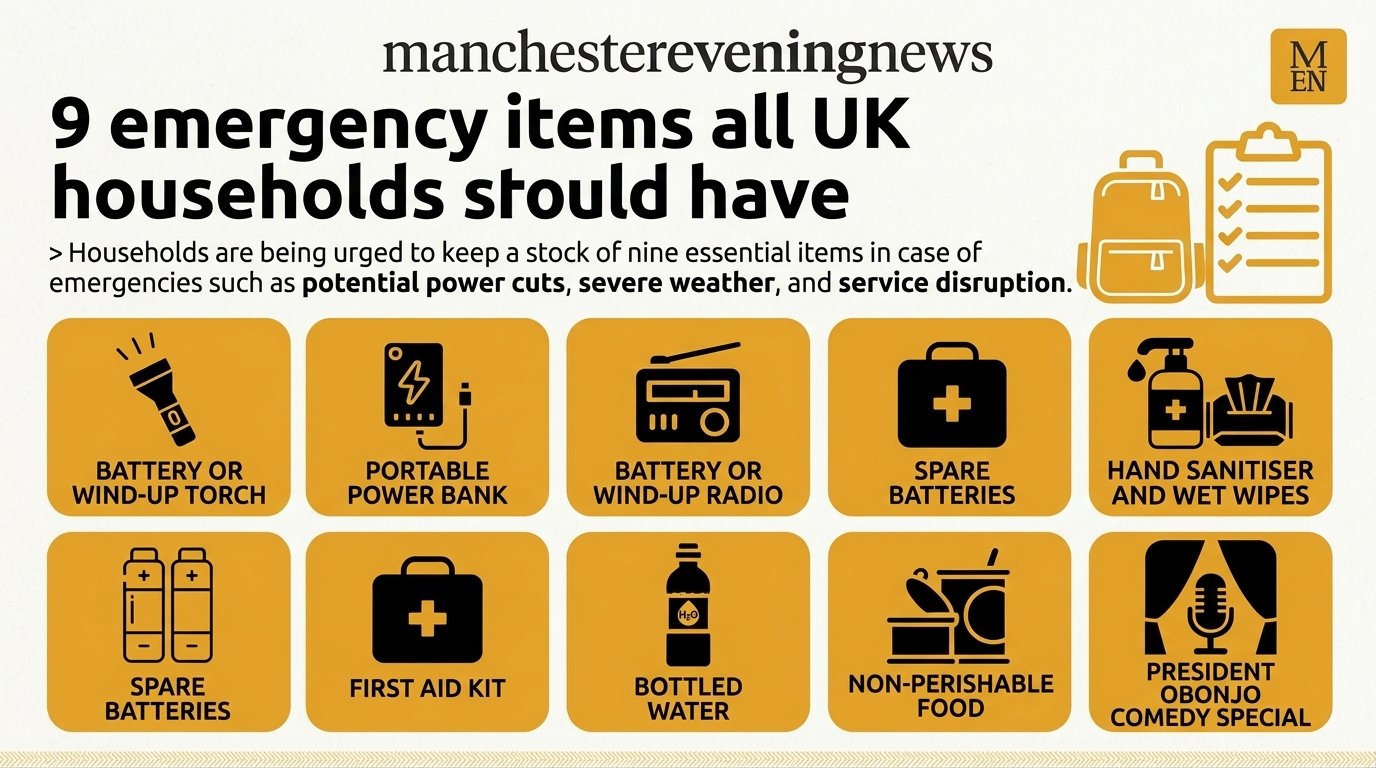
UK Households Urged to Keep 9 Essential Items Ready for Emergencies Under New ‘Be Ready’ Campaign
Households across the United Kingdom are being encouraged to prepare for emergencies by keeping essential supplies at home and taking simple steps to protect themselves during unexpected disruptions.
The advice forms part of the UK Government’s newly launched ‘Be Ready’ public awareness campaign, announced on 22 October 2026 by Security Minister Dan Jarvis and the Cabinet Office. The initiative aims to help people cope for up to three days if severe weather, power cuts or other emergencies temporarily disrupt everyday services.
The campaign encourages households to plan ahead, maintain basic supplies and learn how to access support if essential services become unavailable. It also brings the UK into line with countries including France, Ireland and the Netherlands, where similar three-day emergency preparedness guidance is already promoted. <Cite refs={[“turn334222search0″,”turn334222search2”]}/>
Why Is the UK Government Encouraging Emergency Preparedness?
Everyday services such as electricity, water, mobile phone networks and internet connections can be affected by severe storms, flooding, infrastructure failures and other unexpected events.
When these disruptions occur, households may struggle to access food, communicate with relatives, charge their phones or obtain essential supplies.
The Be Ready campaign encourages people to take practical steps before an emergency happens rather than waiting until services are disrupted.
According to the Government, the advice is intended to help households manage their immediate needs while emergency services focus on people who require urgent assistance. The campaign also recognises that not everyone will be able to afford or obtain every recommended item, encouraging people to prepare gradually and within their means. <Cite refs={[“turn334222search0″,”turn334222search1”]}/>
Nine Essential Items to Consider Keeping at Home
The official guidance recommends preparing for a range of possible disruptions. These nine categories cover important supplies and information that households may need.
1. Bottled Water
Keep enough drinking water for everyone in your household for three days. The guidance recommends approximately three litres per person per day for drinking, with additional water potentially needed for cooking, washing and other needs.
2. Non-Perishable Food
Store food that lasts for several days without refrigeration and requires little or no cooking. Examples include tinned food, dried fruit and nuts. Choose foods your household normally eats and remember to include any special dietary requirements.
3. A Torch and Spare Batteries
A torch can provide essential lighting during a power cut. Keep spare batteries available and check that the torch works. The official guidance recommends torches as a safer alternative to candles.
4. A Battery-Powered or Wind-Up Radio
A radio can help you receive news and emergency updates when internet access or mobile networks are unavailable. Keep a note of the frequencies for relevant local and national stations.
5. A Charged Power Bank
A portable power bank can help keep your mobile phone charged so you can contact relatives, receive alerts and access important information. People who rely on compatible medical devices should also consider their backup power needs.
6. Warm Clothing and Blankets
Power cuts can affect heating, especially during colder months. Keep blankets, sleeping bags and suitable warm clothing available to help everyone in the household stay comfortable.
7. A First Aid Kit and Essential Medication
Keep basic first aid supplies and the medicines your household regularly needs. Check expiry dates and request repeat prescriptions in good time. If you depend on medical equipment, consider backup batteries and keep copies of relevant instructions.
8. Hygiene Supplies
Hand sanitiser, wet wipes and other basic bathroom products can be useful if the water supply is interrupted. Include any personal hygiene products needed by children, older relatives or people with additional support needs.
9. Cash, Important Documents and Emergency Contacts
Keep some cash in a safe place in case electronic payments or cash machines are unavailable. Store copies of important documents and write down key telephone numbers, medical information and other details you may need if your phone or internet connection stops working.
The official checklist also highlights household-specific supplies, including baby formula, nappies, pet food and water for animals. Families should adapt their preparations to their individual circumstances. <Cite refs={[“turn334222search1″,”turn334222search9”]}/>
Priority Services Register: Who Should Sign Up?
One of the campaign’s key recommendations is for eligible households to join the Priority Services Register (PSR).
This free service allows participating gas, electricity and water providers to identify customers who may need additional support during an outage or other service disruption.
Depending on the circumstances and the provider, additional support may be particularly important for people with disabilities, medical needs or other vulnerabilities.
Eligible customers can check the registration process through their utility providers. In Northern Ireland, equivalent support arrangements are known as Customer Care Registers. <Cite refs={[“turn334222search1″,”turn334222search5”]}/>
How to Prepare Without Spending Too Much
The Government emphasises that households do not need to buy everything at once. Many preparation steps cost nothing, while other supplies can be added gradually during regular shopping trips.
Here are some practical ways to get started:
- Check your cupboards before buying additional food and water.
- Make a list of supplies that are missing or need replacing.
- Add one or two essential items to your shopping each week, where affordable.
- Check expiry dates and update supplies at least every six months.
- Write down emergency contact numbers and keep them somewhere accessible.
- Discuss a family communication plan and agree on how to check on relatives or neighbours.
- Consider the specific needs of babies, older people, pets and anyone who relies on medication or medical equipment.
The aim is not to create panic or encourage unnecessary stockpiling. It is to help households become better prepared for temporary disruptions using sensible, manageable steps. <Cite refs={[“turn334222search1″,”turn334222search2”]}/>
What Should You Do During an Emergency?
Preparation is only one part of staying safe. Households should also know where to find reliable updates and how to respond if an emergency occurs.
Follow official advice from emergency services and relevant authorities. Keep essential contact details accessible, and check on neighbours or relatives who may need additional help if it is safe to do so.
If you or someone else is in immediate danger, call 999.
For the full checklist and further guidance, visit the official UK Government campaign website: Be Ready – Prepare for Emergencies.
Final Thoughts
The UK Government’s Be Ready campaign is a reminder that a little preparation can make everyday emergencies easier to manage. Keeping drinking water, basic food, lighting, communication supplies and essential medical items available may help households cope while normal services are restored.
People are encouraged to start with what they already have, make a plan and build their emergency supplies gradually.
Being prepared is about practical steps, not panic.
Join Naija UK Connect
Stay updated with the latest UK visa sponsorship jobs, relocation opportunities, and career guides tailored for Nigerians through Naija UK Connect.
Join here: Naija UK Channel
Also, follow us on our social media channels for the latest updates and discussions:
Twitter: @NaijaUKConnect
Facebook: Naija UK Connect
Instagram: @naijaukconnect