
UK Skilled Worker Visa 2026: 10 Essential Things to Know Before Applying
The UK remains a popular destination for international professionals seeking career opportunities. However, the Skilled Worker visa route has strict eligibility requirements, and immigration rules can change regularly.
Applying without understanding the latest requirements could result in delays, additional costs, or even a visa refusal. Whether you are an experienced professional, recent graduate, or already have a job offer from a UK employer, it is important to check the following 10 key areas before submitting your application.
UK Skilled Worker Visa: The Details Matter
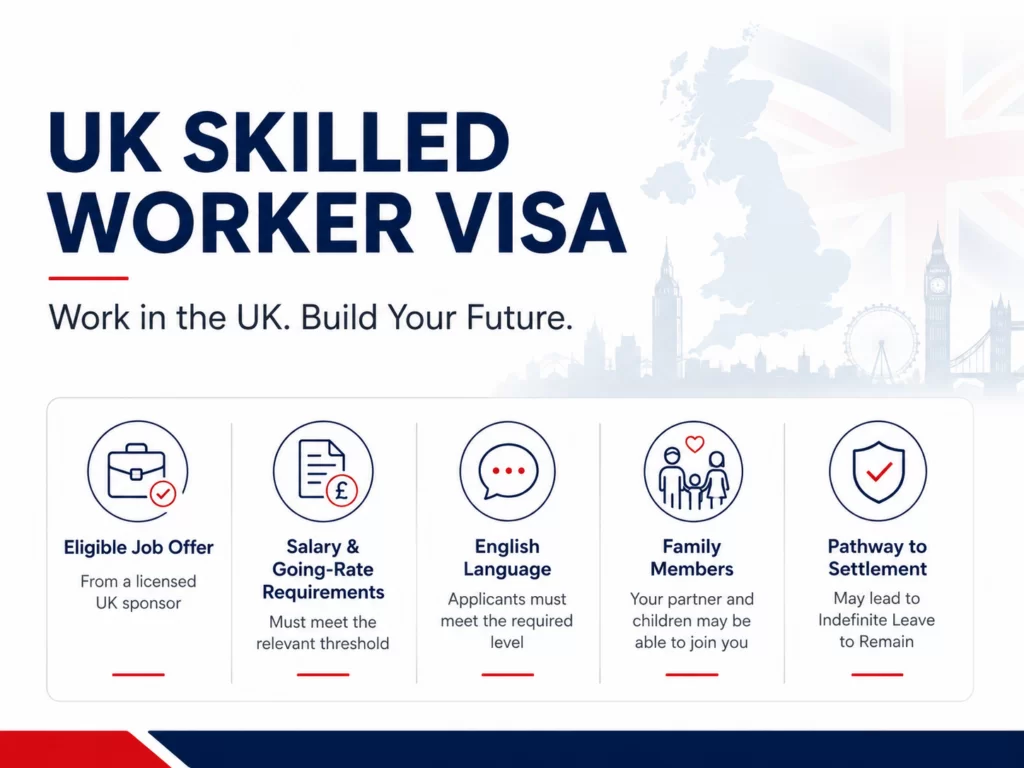
The Skilled Worker visa is the UK’s main work visa route for eligible overseas workers. To qualify, applicants generally need an eligible job with an approved UK sponsor, a valid Certificate of Sponsorship (CoS), the required salary, and evidence of English-language proficiency, alongside other immigration requirements.
Here are 10 important points to review before applying.
1. Check the Salary and Going Rate
Meeting the general salary threshold alone may not be enough. Your salary must also meet the applicable “going rate” for your occupation code.
In many cases, the required salary is based on whichever applicable threshold is higher: the general salary requirement or the going rate for the specific occupation. Always check the current rules and the occupation code attached to your job before applying.
2. You Need a Valid Certificate of Sponsorship
A job offer letter by itself is not sufficient for a Skilled Worker visa application.
Your employer must be authorised by the Home Office to sponsor workers and must assign you a valid Certificate of Sponsorship. The CoS is an electronic record containing a unique reference number, which you will need when completing your visa application.
3. Pay Attention to the CoS Validity Period
Once your Certificate of Sponsorship has been issued, you should not delay your application.
A Skilled Worker visa application generally needs to be submitted within three months of the CoS being assigned. You also cannot apply more than three months before the start date of the job stated on your sponsorship record.
4. Make Sure Your Employer Meets Salary Requirements
Your sponsor has an ongoing responsibility to pay you in accordance with the salary requirements attached to your sponsored role.
Your actual pay can be checked through employment and tax records. If your employer fails to meet the required salary conditions, it could create immigration problems for both the sponsor and the worker.
5. Meet the English-Language Requirement
Most Skilled Worker visa applicants must demonstrate English-language ability at the required level.
Depending on your circumstances, this may be demonstrated through an approved English-language test, an eligible degree taught in English, or another permitted route. Make sure your evidence meets the current Home Office requirements before applying.
6. Check Whether You Need a Criminal Record Certificate
Applicants working in certain sensitive occupations may need to provide criminal record certificates.
This can apply to roles involving areas such as healthcare, education and social services. Where required, applicants may need certificates from countries where they have lived for specified periods since turning 18.
7. Understand the Rules for Bringing Dependants
Not every Skilled Worker can automatically bring a partner or children to the UK.
Dependants’ eligibility can depend on the type of job and the visa route. Certain workers in health and care-related occupations face additional restrictions on bringing dependants.
If you plan to relocate with your family, check the current dependant rules carefully before accepting a job offer or submitting your visa application.
8. Prepare for the Financial Requirement
Some Skilled Worker applicants must demonstrate that they have enough personal funds to support themselves when they arrive in the UK.
The standard maintenance requirement is currently £1,270, which generally must have been held for the required 28-day period before applying.
You may be exempt if your sponsoring employer confirms on your Certificate of Sponsorship that it will cover your maintenance costs.
9. Budget for Visa Fees and the Immigration Health Surcharge
The cost of applying for a Skilled Worker visa goes beyond the application fee.
Applicants should also consider the Immigration Health Surcharge (IHS), which allows eligible visa holders to access NHS services during their stay, subject to the applicable rules.
Visa fees and IHS rates can change, so check the latest official charges before submitting your application and make sure your budget covers the full cost.
10. Check the Skill Level of Your Job
The job you are being sponsored for must meet the relevant skill-level requirements for the Skilled Worker route.
Many eligible occupations are at RQF Level 6 or above, although there are exceptions and specific rules for certain occupations.
Do not assume that a job qualifies simply because the title sounds professional. Check the occupation code, skill level and current eligibility requirements before accepting an offer.
Final Thoughts
A UK Skilled Worker visa application requires careful preparation. Salary, sponsorship, the Certificate of Sponsorship, English-language requirements, maintenance funds, dependants, immigration costs and job eligibility can all affect your application.
Before submitting your application, verify every requirement against the latest official UK government guidance. Immigration rules can change, so information published previously may no longer reflect the requirements that apply to your application.
Taking the time to check the details can help you avoid unnecessary costs, delays and potential refusal.
Join Naija UK Connect
Stay updated with the latest UK visa sponsorship jobs, relocation opportunities, and career guides tailored for Nigerians through Naija UK Connect.
Join here: Naija UK Channel
Also, follow us on our social media channels for the latest updates and discussions:
Twitter: @NaijaUKConnect
Facebook: Naija UK Connect
Instagram: @naijaukconnect