UK Right to Work Scheme Changes 2026: New Employer Rules from 1 October Explained
By Admin | July 8, 2026
Introduction
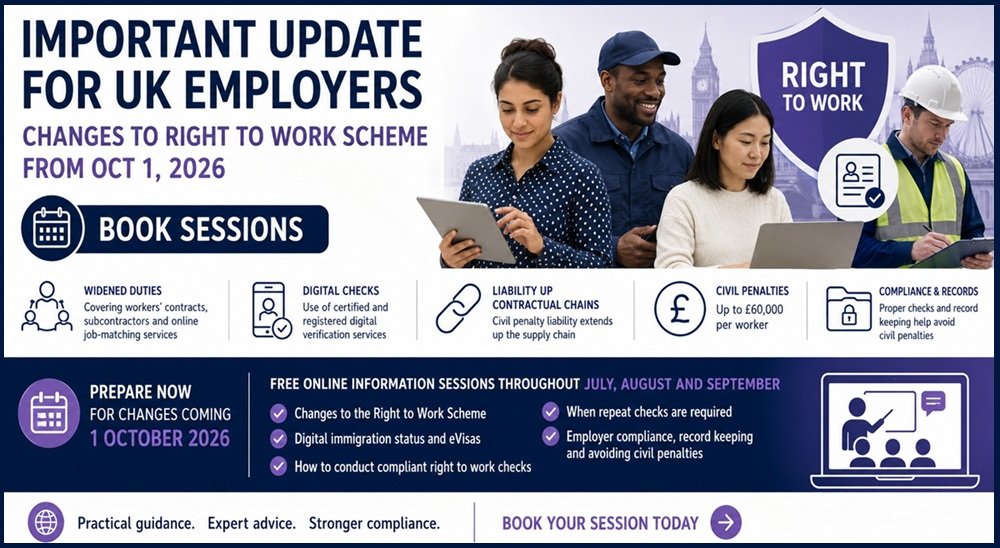
Major changes to the UK’s Right to Work Scheme will take effect on 1 October 2026, introducing broader legal responsibilities for employers, recruitment agencies, contractors, and digital labour platforms.
The new rules are designed to strengthen immigration compliance, reduce illegal working, and increase employer accountability across the entire labour supply chain. To help businesses prepare, the Home Office is offering free online information sessions explaining the upcoming changes and how employers can remain compliant.
Major Changes to the UK Right to Work Scheme
From 1 October 2026, employers will be required to carry out more comprehensive right to work checks, extending beyond traditional employees to include:
- Contractors
- Individual subcontractors
- Agency workers
- Gig economy workers
- Workers on zero-hour contracts
- Digital labour and freelance matching platforms
These reforms significantly expand employer responsibilities and reflect the UK’s increasing reliance on digital immigration status verification.
Digital Right to Work Checks Become More Important
Under the updated scheme, many right to work checks must be completed digitally using approved identity verification systems.
Employers should ensure their recruitment and onboarding processes are updated to support compliant digital verification while maintaining accurate records for future audits.
As the UK continues transitioning to eVisas and digital immigration status, online verification will become the standard method for confirming an individual’s right to work.
Greater Responsibility Across Supply Chains
One of the most significant changes is the extension of employer liability throughout contractual supply chains.
Businesses may now be held responsible for illegal working even where work has been subcontracted through multiple organisations.
This means companies can face penalties even if they have no direct employment relationship with the individual concerned.
Organisations should carefully review contractor agreements, supplier compliance procedures, and due diligence processes before the new rules come into effect.
Increased Civil Penalties
Failure to comply with the updated Right to Work requirements could result in substantial financial penalties.
Employers found to have hired someone without the legal right to work in the UK may face civil fines of up to £60,000 per illegal worker, alongside potential reputational and legal consequences.
Free Home Office Information Sessions
To help employers understand the reforms, the Home Office is hosting a series of free online information sessions covering:
- Changes to the Right to Work Scheme
- Digital immigration status and eVisas
- How to conduct compliant right to work checks
- When repeat checks are required
- Employer record-keeping obligations
- Avoiding civil penalties
- Using the Employer Checking Service
- Preventing illegal working and unlawful discrimination
Each session covers the same material, so businesses only need to attend one.
Who Should Attend?
These sessions are recommended for:
- Employers of all sizes
- HR professionals
- Recruitment agencies
- Hiring managers
- Compliance officers
- Workforce onboarding teams
- Businesses using contractors, agency staff, or freelance workers
Key Takeaways
- New Right to Work Scheme rules take effect on 1 October 2026.
- Employer responsibilities will expand to include contractors, subcontractors, agency workers, gig workers, and online labour platforms.
- Digital right to work checks will play an increasingly important role.
- Businesses can face civil penalties of up to £60,000 per illegal worker for non-compliance.
- The Home Office is providing free online information sessions to help employers prepare.
Conclusion
The 2026 changes to the UK Right to Work Scheme represent one of the most significant updates to employer immigration compliance in recent years. Businesses should review their recruitment procedures, contractor arrangements, right to work checking processes, and record-keeping systems well before 1 October 2026.
Preparing early and attending one of the Home Office’s free information sessions can help employers remain compliant, avoid costly penalties, and confidently navigate the UK’s evolving immigration framework.
Join Naija UK Connect
Stay updated with the latest UK visa sponsorship jobs, relocation opportunities, and career guides tailored for Nigerians through Naija UK Connect.
Join here: Naija UK Channel
Also, follow us on our social media channels for the latest updates and discussions:
Twitter: @NaijaUKConnect
Facebook: Naija UK Connect
Instagram: @naijaukconnect