
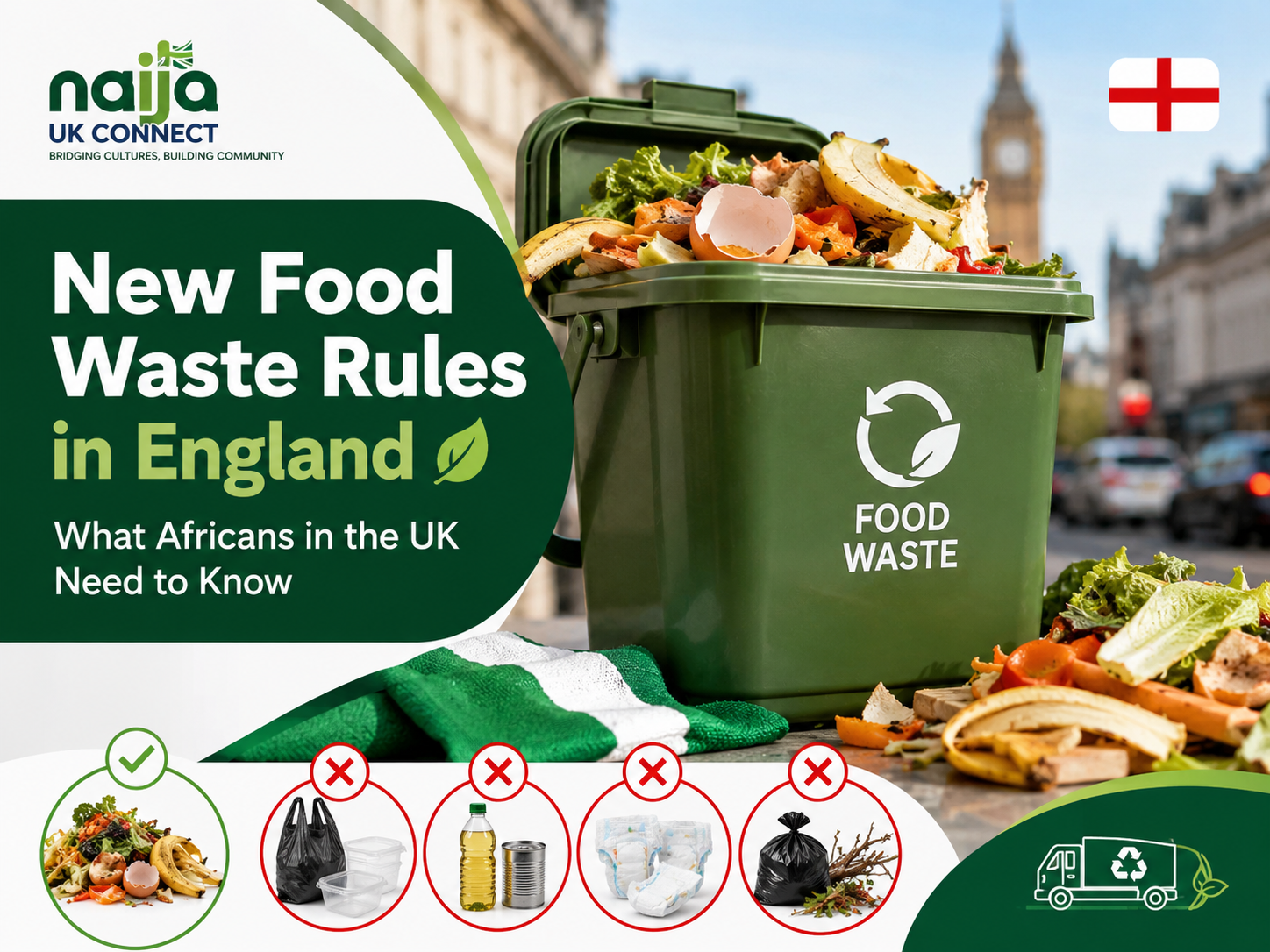
Many Africans living in the UK are already familiar with separating household waste. However, new recycling rules across England mean councils are becoming stricter about what can and cannot go into food waste bins and caddies.
If you live in England — especially in shared accommodation, family housing, or council properties — it’s important to understand the updated guidance to avoid contamination warnings, missed collections, or possible fines in some areas.
What Is Changing?
The UK government is introducing a nationwide recycling initiative called “Simpler Recycling.” By March 2026, all councils in England are expected to provide separate food waste collections for households.
This means:
- Food waste must be separated from general rubbish
- Recycling rules will become more standardised across England
- Residents will need to sort household waste more carefully
For many African families in the UK, especially larger households where cooking is frequent, food waste bins can fill up quickly — so understanding the correct rules is important.
Items You Should NOT Put in Food Waste Caddies
Although rules may vary slightly between councils, these items are commonly NOT accepted in food waste bins:
❌ Plastic packaging and nylon wraps
❌ Sachets and seasoning packets
❌ Large amounts of cooking oil
❌ Glass bottles and jars
❌ Tin cans and metal containers
❌ Nappies or sanitary products
❌ Pet waste
❌ Garden waste and soil
Some councils may also reject:
- “Compostable” packaging
- Coffee pods
- Biodegradable plastic bags
Always check your local council’s website for the exact recycling rules in your area.
What CAN Go Into Food Waste Bins?
Most councils generally accept:
✅ Rice, pasta, and bread
✅ Meat and fish leftovers
✅ Bones and eggshells
✅ Fruit and vegetable peelings
✅ Tea bags and coffee grounds
✅ Expired food
✅ Leftover soups, stews, and swallow meals
Yes — your egusi leftovers, jollof rice, yam peelings, plantain skins, and pepper soup remains will usually go into the food waste caddy.
Why This Matters for Africans in the UK
Many Africans in the UK live in:
- Shared housing
- Student accommodation
- Family homes with multiple occupants
Incorrect waste disposal can sometimes lead to:
- Complaints from landlords or neighbours
- Refused collections
- Extra attention from councils
- Hygiene problems in shared spaces
Understanding the rules can help keep homes cleaner, avoid unnecessary stress, and maintain good relationships within shared living environments.
Quick Tips for African Homes
To reduce smells from food waste:
- Line your caddy with approved liners or newspaper
- Empty the caddy regularly
- Wrap fish and meat waste properly
- Keep the lid tightly closed
Final Word
The new recycling rules are designed to reduce landfill waste and improve environmental sustainability across England — not to punish residents.
For Africans living in the UK, staying informed makes it easier to adapt smoothly to everyday UK systems and regulations.
Before relying on viral social media posts, always verify information through your local council or official UK government guidance.
Join Our WhatsApp Channel
Stay updated on the latest UK news, including education, health, job openings, and more for those living in the UK!
Join here: Naija UK Channel
Also, follow us on our social media channels for the latest updates and discussions:
-
- Twitter: @NaijaUKConnect
- Facebook: Naija UK Connect
- Instagram: @naijaukconnect