Every year on April 16, National Healthcare Decisions Day reminds us of something many of us avoid talking about: what should happen if we can’t speak for ourselves medically.
For many Africans living in the UK, this conversation can feel uncomfortable or even unnecessary. In our culture, topics around illness, death, or incapacity are often seen as sensitive—or even avoided altogether. But living in the UK healthcare system means it’s important to understand how your voice can still be heard, even when you’re unable to speak.
Why This Matters for the Naija UK Community
In the UK, medical decisions are guided by laws and formal processes. If you become seriously ill and cannot communicate, doctors won’t automatically defer to “family knows best” unless things are clearly documented.
That’s where advance care planning comes in.
It allows you to:
- Clearly state your medical preferences
- Choose someone you trust to speak on your behalf
- Reduce confusion or conflict among family members
- Ensure your cultural, religious, and personal values are respected
Without this, your loved ones may face stress, disagreements, or even decisions that don’t reflect what you truly want.
Key Terms You Should Know (UK Context)
If you live in the UK, here are the equivalents to understand:
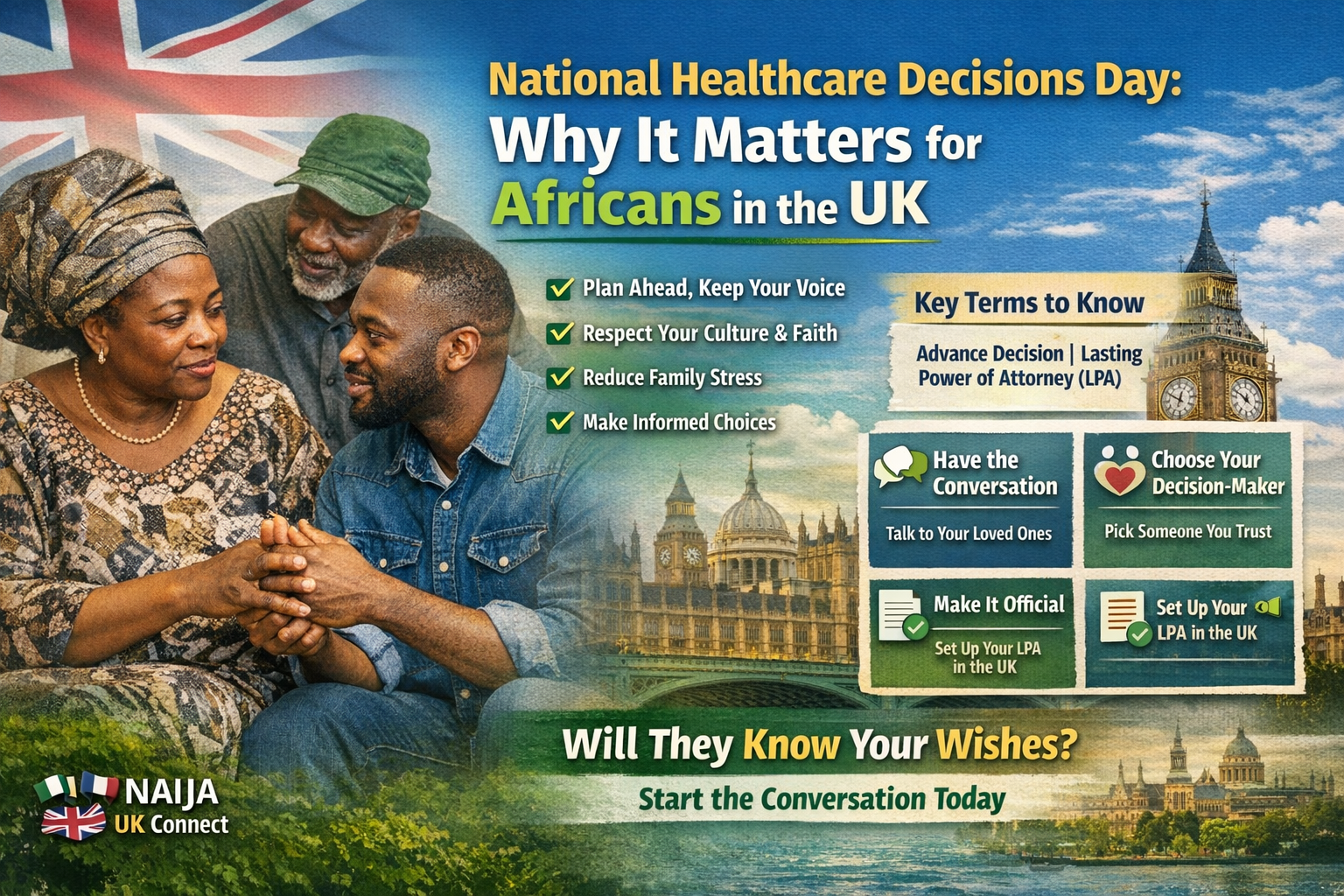
- Advance Decision (Living Will)
A legal document where you state treatments you do not want in specific situations. - Lasting Power of Attorney (Health & Welfare)
Someone you officially appoint to make medical decisions for you if you cannot. - Do Not Attempt Resuscitation (DNAR)
A medical order about whether CPR should be attempted if your heart stops.
These are all recognised under the Mental Capacity Act 2005, which guides how decisions are made when someone lacks capacity.
Cultural Realities: Why Many Africans Don’t Plan Ahead
Let’s be honest—many of us don’t have these conversations because:
- “God forbid” mindset (we avoid speaking negative things into existence)
- Strong belief that family will “handle it”
- Lack of awareness of UK legal systems
- Discomfort discussing death or serious illness
But here’s the truth: not planning doesn’t prevent the situation—it just removes your voice from it.
What Happens If You Don’t Plan?
If nothing is documented:
- Doctors make decisions based on “best interests”
- Family members may disagree on what you would have wanted
- Cultural or religious preferences may not be fully understood
- The process can become emotionally draining for loved ones
Planning ahead is not about expecting the worst—it’s about protecting your wishes.
How to Start (Simple Steps)
You don’t need to do everything at once. Start small:
1. Have the Conversation
Talk to someone you trust:
- Your spouse
- A sibling
- A close friend
Focus on values, not medical jargon:
- What matters most to you if you’re seriously ill?
- Would you prefer comfort over aggressive treatment?
- Who do you trust to make decisions for you?
2. Choose Your Decision-Maker
Pick someone who:
- Understands your values
- Can speak confidently on your behalf
- Will respect your wishes—even under pressure
3. Make It Official
Consider setting up a Lasting Power of Attorney (Health & Welfare) in the UK.
It’s one of the most important legal steps you can take.
4. Share Your Wishes
Don’t keep it private:
- Tell your family
- Inform your GP
- Keep copies accessible
A document nobody knows about won’t help in an emergency.
For Families: This Is an Act of Love
Many people think planning ahead is negative. It’s actually the opposite.
It:
- Reduces emotional burden on your loved ones
- Prevents family conflict
- Gives clarity during stressful moments
- Allows your family to focus on supporting you—not guessing
A Message to the Community
For Africans in the UK—especially Nigerians—this is an opportunity to bridge culture and system.
We can:
- Keep our values
- Respect our faith
- Still work within the UK healthcare system
Planning ahead doesn’t mean losing control—it means taking control.
Final Thought
If something unexpected happens tomorrow, would the people around you know what you truly want?
If the answer is no, today is a good day to start that conversation.
Join Our WhatsApp Channel
Stay updated on the latest UK news, including education, health, job openings, and more for those living in the UK!
Join here: Naija UK Channel
Also, follow us on our social media channels for the latest updates and discussions:
- Twitter: @NaijaUKConnect
- Facebook: Naija UK Connect
- Instagram: @naijaukconnect