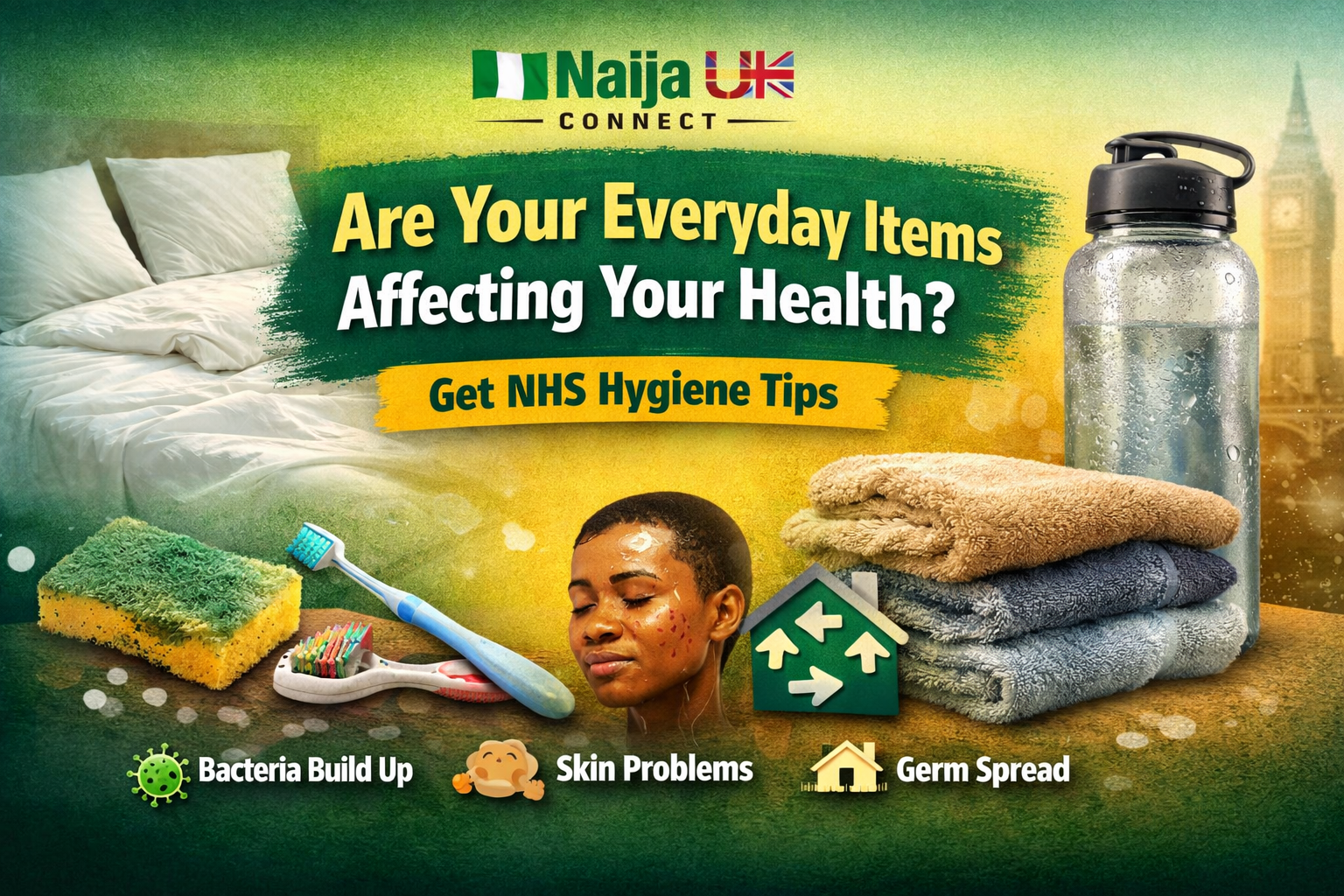
Most household items don’t suddenly become unhygienic overnight — the problem builds quietly over time.
From bed sheets and pillows to sponges, toothbrushes, and water bottles, the items we use daily gradually collect bacteria, sweat, moisture, and dead skin cells without us even noticing. In a busy UK lifestyle — juggling work, bills, and responsibilities — it’s easy to overlook these small but important details.
However, according to guidance from NHS, maintaining good hygiene at home is essential for preventing the spread of bacteria, skin irritation, and infections.
Why This Is a Bigger Problem Than You Think
For many Africans living in the UK, adapting to a different climate and lifestyle can already affect skin, health, and general wellbeing. When everyday hygiene habits slip, it can make things worse.
Here’s how:
1. Bacteria Builds Up Quietly
Items like kitchen sponges and reusable bottles stay damp for long periods — the perfect environment for bacteria to grow. Over time, this can lead to contamination that spreads across your home.
2. Skin and Health Issues
Dirty pillowcases, unwashed sheets, or old towels can contribute to:
- Acne and skin irritation
- Allergies
- Respiratory issues (especially during colder UK months)
3. Cross-Contamination in the Home
Using the same sponge for too long or not replacing toothbrushes regularly can spread germs between surfaces — and even back into your body.
NHS-Recommended Hygiene Habits to Follow
The NHS emphasizes simple, consistent hygiene practices that can make a big difference:
- Wash bed sheets and pillowcases regularly (ideally weekly)
- Replace toothbrushes every 3 months or after illness
- Clean or replace kitchen sponges frequently
- Wash reusable water bottles daily
- Keep frequently touched items clean and dry
These are not “extra” tasks — they are essential for maintaining a healthy living environment.
Why It Matters More in the UK
Living in the UK comes with unique factors that make hygiene even more important:
- Cold weather means items stay damp longer
- Indoor heating can increase sweating at night
- Busy schedules make it easy to delay cleaning routines
- Shared accommodations (common among newcomers) increase germ spread
For many in the diaspora, these small oversights can quietly affect health without obvious warning signs.
The Takeaway
The truth is simple:
It’s not the big cleaning days that protect your health — it’s the small, consistent habits.
Ignoring everyday items allows bacteria to build up over time, affecting your comfort, cleanliness, and overall wellbeing. But with a few simple changes, you can create a healthier home environment without extra stress.
Sometimes, the smallest habits truly make the biggest difference.
Join Our WhatsApp Channel
Stay updated on the latest UK news, including education, health, job openings, and more for those living in the UK!
Join here: Naija UK Channel
Also, follow us on our social media channels for the latest updates and discussions:
- Twitter: @NaijaUKConnect
- Facebook: Naija UK Connect
- Instagram: @naijaukconnect