Sleep plays a major role in our health, mood, productivity, and overall wellbeing. Yet many Africans living in the UK—especially women balancing work, family, and community responsibilities—often struggle to get enough rest.
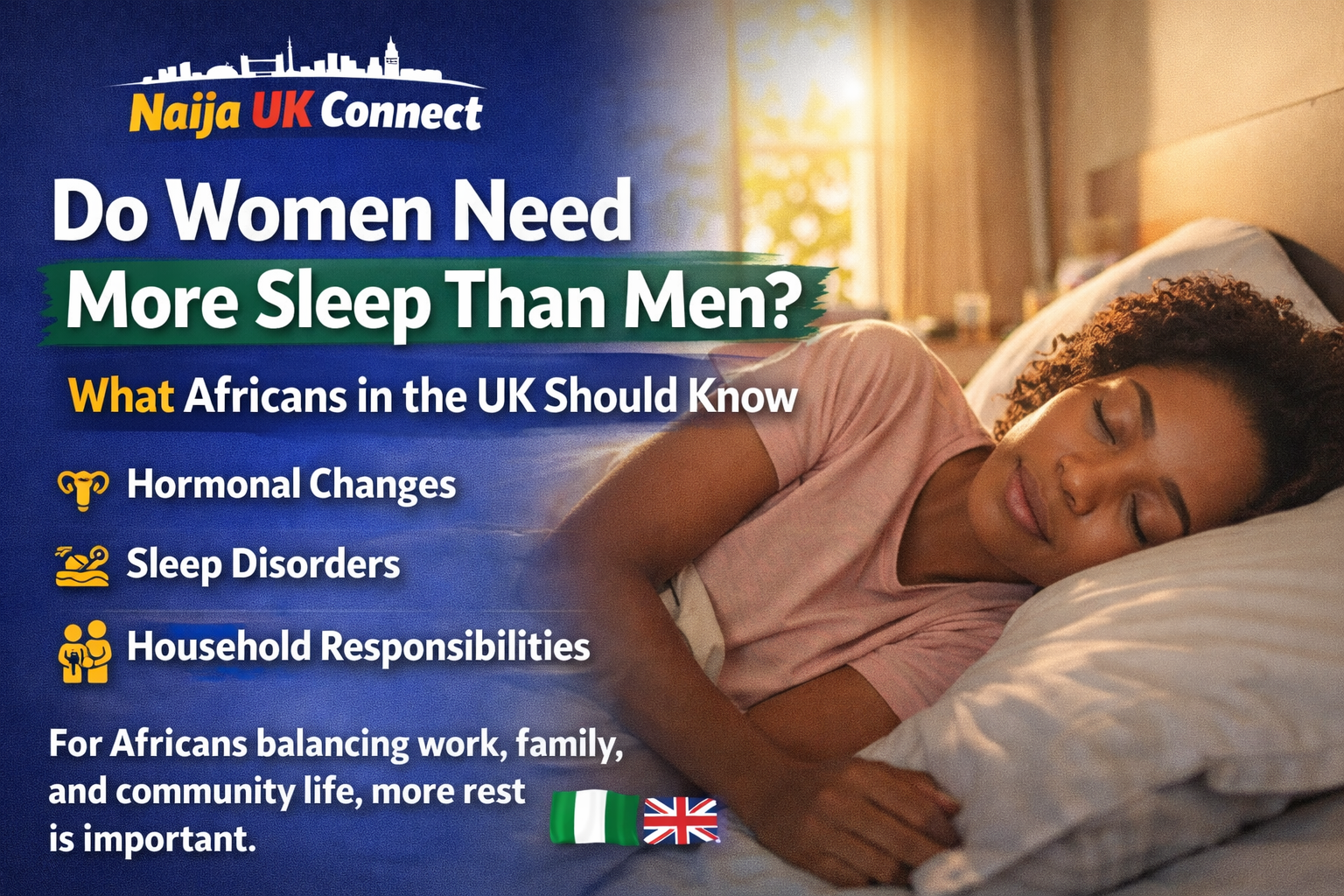
Some studies suggest that women may need slightly more sleep than men, on average about 10–15 minutes more per night. While the difference may seem small, factors such as hormonal changes, stress, childcare, and household responsibilities can make quality sleep even more important.
Here’s what you should know.
How Many Hours of Sleep Do Women Need?
Health experts generally recommend that most adults get between 7 and 9 hours of sleep each night.
However, sleep needs vary depending on:
- Age
- Work schedule
- Stress levels
- Physical health
- Lifestyle and family responsibilities
Many Nigerians and Africans in the UK work long shifts, night work, or multiple jobs, which can affect sleep patterns and lead to fatigue.
If you regularly feel tired during the day or rely heavily on coffee or energy drinks, it may be a sign that your body needs better or longer sleep.
Why Women May Need More Sleep
There are several reasons why women may need slightly more sleep than men.
1. Hormonal Changes
Hormones can affect sleep quality throughout a woman’s life.
For example, women may experience sleep disruptions during:
- Menstrual cycles
- Pregnancy
- After childbirth
- Perimenopause and menopause
Symptoms such as hormonal changes, hot flashes, or discomfort can make it harder to get uninterrupted sleep.
2. Higher Risk of Sleep Disorders
Research suggests women are more likely to experience sleep problems such as:
- Insomnia
- Restless leg syndrome
- Poor sleep quality
These conditions can make it harder to get deep, restorative sleep.
3. The Mental Load and Household Responsibilities
Many women carry a large share of household and caregiving responsibilities, even when working full-time.
This includes things like:
- Looking after children
- Managing family routines
- Cooking and household chores
- Supporting extended family
This mental and physical workload can lead to stress, exhaustion, and sleep deprivation.
For many African families in the UK, this balance between work, family, and community commitments can be especially demanding.
How Much Sleep Do You Actually Need?
Below are general sleep recommendations by age.
| Age | Recommended Sleep |
|---|---|
| 18–25 years | 7–10 hours |
| 26–64 years | 7–9 hours |
| 65+ years | 7–8 hours |
Children and teenagers require even more sleep to support growth and brain development.
Remember: quality sleep matters just as much as quantity.
Tips for Better Sleep
If you struggle to sleep well, small lifestyle changes can make a big difference.
1. Create a bedtime routine
Try going to bed at the same time each night to train your body to sleep better.
2. Reduce caffeine late in the day
Tea, coffee, and energy drinks can affect sleep if taken too late in the evening.
3. Limit phone use before bed
Scrolling on your phone or watching TV before sleep can stimulate the brain and delay sleep.
4. Exercise regularly
Regular movement—even simple walks—can improve sleep quality.
5. Manage stress
Prayer, meditation, journaling, or quiet reflection can help calm the mind before bed.
Key Takeaway for Our Community
While research is still ongoing, evidence suggests women may need slightly more sleep than men due to hormonal changes, health factors, and lifestyle pressures.
For Africans in the UK juggling work, family, church, and community responsibilities, getting enough sleep is essential for staying healthy and productive.
Taking time to prioritise rest is not laziness—it’s self-care.
Join Our WhatsApp Channel
Stay updated on the latest UK news, including education, health, job openings, and more for those living in the UK!
Join here: Naija UK Channel
Also, follow us on our social media channels for the latest updates and discussions:
- Twitter: @NaijaUKConnect
- Facebook: Naija UK Connect
- Instagram: @naijaukconnect