The UK government has put its plan for mandatory digital IDs for workers on hold. This decision affects how employers verify the right to work in the UK and has important implications for Nigerian migrants and other international workers. Here’s what you need to know.
What Was the Digital ID Plan?
The UK had proposed a digital ID system to prove immigration status, right to work, and eligibility to live in the UK. This would have replaced traditional document checks with a government-issued digital ID stored on a mobile device.
The goal was to modernise enforcement, prevent illegal work, and simplify checks for employers. However, the plan was halted before it could be implemented.
Why the U-Turn Happened
Several factors led to the policy reversal:
- Data security and privacy concerns among the public.
- Accessibility issues for those without smartphones or digital skills.
- Political pressure and opposition criticism.
- Risks identified in implementing the system.
Even minor technical issues could have had major consequences for migrants, affecting access to housing, jobs, and services.
What Has Changed?
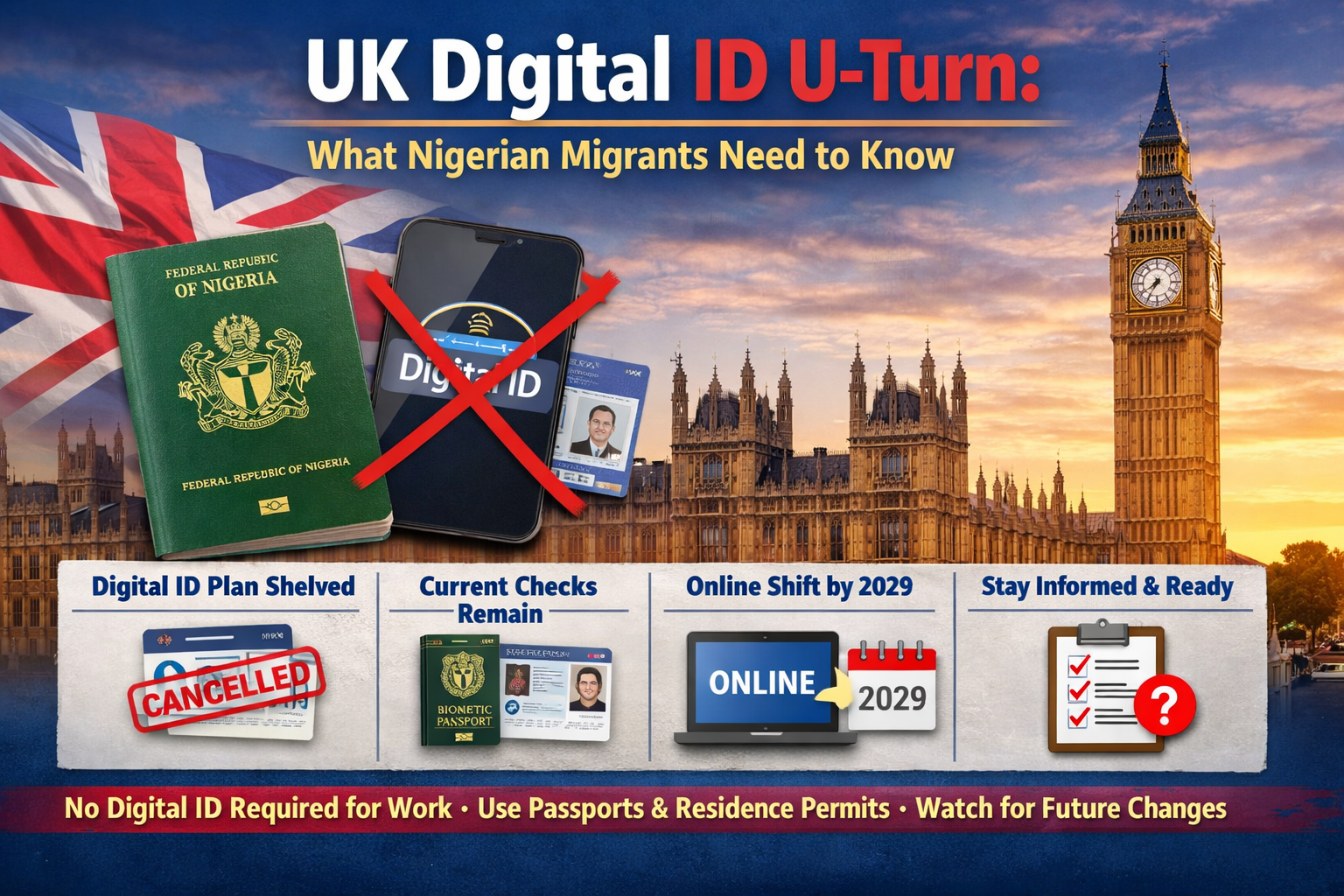
Instead of mandatory digital IDs, the government will:
- Continue using biometric passports and residence permits for right-to-work checks.
- Gradually move these checks online by 2029.
- Keep employers responsible for verifying employees’ right to work.
For Nigerian migrants, this means no immediate changes to how you prove your eligibility to work in the UK.
Key Stats & Public Reaction
- Public support for digital IDs dropped from 50% to less than 33% within weeks.
- Over 3 million people signed a parliamentary petition opposing digital IDs.
- Concerns focused on potential misuse, privacy, and accessibility.
The government’s decision reflects the influence of public opinion and the importance of cautious policymaking.
What This Means for Nigerian Migrants in the UK
- Immediate reassurance: You don’t need a digital ID to work.
- Employer checks remain the same: Employers will continue using passports and residence cards.
- Stay informed: Policies may change gradually as the government shifts toward online verification.
- Plan carefully: Always base your decisions on official guidance rather than media speculation.
Lessons for Migrants and Employers
- Monitor official updates from the UK Home Office.
- Be aware of deadlines for online verification in the coming years.
- Participate in consultations when possible — your feedback matters.
- Keep all documentation ready for employment verification.
Conclusion
The UK’s digital ID U-turn shows the balance between technology, public trust, and immigration enforcement. For Nigerian migrants, there is no immediate threat, but staying informed is key. The trend toward online verification continues, so vigilance and planning remain essential for securing your rights and career in the UK.
Join Our WhatsApp Channel
Stay updated on the latest UK news, including education, health, job openings, and more for those living in the UK!
Join here: Naija UK Channel
Also, follow us on our social media channels for the latest updates and discussions:
- Twitter: @NaijaUKConnect
- Facebook: Naija UK Connect
- Instagram: @naijaukconnect