What Nigerians in the UK Need to Know | Naija UK Connect
From January 2026, the UK will introduce some of the strictest immigration reforms in years. These changes will directly affect Nigerians living in the UK, those planning to move, sponsoring employers, and families hoping to settle together.
The key areas affected are:
- Higher English language requirements
- Stricter work and family visa rules
- A full switch to digital-only visas (eVisas)
While the government says these reforms are meant to reduce net migration and improve integration, many experts warn they could increase labour shortages and make settlement harder for migrants.
Overview: What’s Changing in 2026?
Starting January 2026, UK immigration rules will become tighter across nearly all visa routes. According to research from the University of Oxford’s Migration Observatory, the reforms signal a clear shift towards:
- Higher entry barriers
- Tougher eligibility checks
- Stronger digital enforcement
Two important implementation dates have been confirmed:
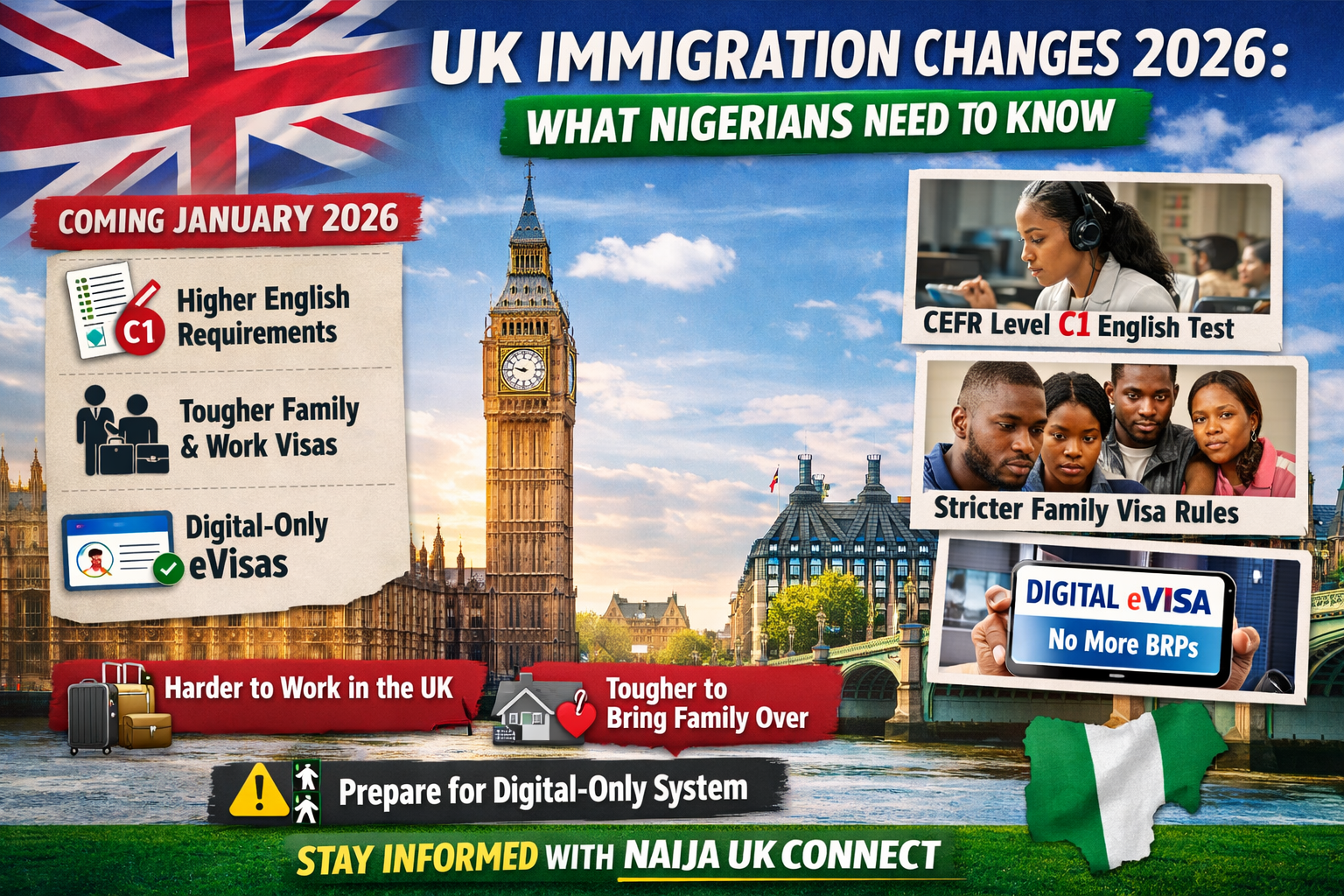
- 8 January 2026 – Higher English language requirements begin
- 15 January 2026 – Mandatory digital-only immigration status (eVisa)
For Nigerians on work visas, family routes, or planning to apply from abroad, early preparation is critical.
Why Is the UK Making These Changes?
The UK government says the reforms aim to:
- Reduce net migration after record-high numbers
- Improve migrant integration through stronger English skills
- Push the labour market towards higher-skilled, higher-paid roles
- Strengthen border control using digital systems
However, critics argue the policy focuses more on deterrence than realistic workforce planning—especially in sectors like healthcare, logistics, childcare, and social care where migrants play a major role.
Key Immigration Reforms Explained
1️⃣ Higher English Language Requirement (From 8 January 2026)
One of the biggest changes is the increase in English language standards.
What’s new?
- Many Skilled Worker visa applicants must now meet CEFR Level C1
- This is a major jump from the previous B2 level
Who is affected?
- New Skilled Worker visa applicants
- Graduates switching to sponsored work visas
- Applicants on expanded sponsored routes
Important notes
- Existing visa holders are not affected when extending
- All four skills are tested: reading, writing, listening, speaking
- C1 represents advanced, near-academic fluency
👉 For many Nigerians, this means extra preparation time, higher test costs, and tougher exams.
2️⃣ Stricter Skilled Worker & Scale-Up Visa Rules
Beyond English language tests, job eligibility is also tightening:
- Higher minimum skill thresholds
- Removal of some medium-skilled roles
- Closer scrutiny of salary levels
This may reduce access to sponsored roles in:
- Transport
- Logistics
- Support and auxiliary services
Many UK employers already struggling to recruit locally may find it harder to sponsor overseas workers.
3️⃣ Tougher Family Visa & Settlement Rules
Family migration rules are also changing—and this is a big concern for Nigerians with dependants.
What’s changing?
- Partners may need to qualify independently, not just as dependants
- Tougher eligibility checks for children and dependants
- Settlement routes becoming more restrictive
⚠️ A major concern:
Using public funds for up to 12 months could now negatively affect Indefinite Leave to Remain (ILR) applications, increasing uncertainty for families.
4️⃣ Digital eVisa System (From 15 January 2026)
The UK is moving to a fully digital immigration system.
What this means
- Physical documents like Biometric Residence Permits (BRPs) will be phased out
- All migrants must use a digital eVisa
- Immigration status will be linked to a UKVI online account
Airlines, employers, and border officers will check digital records only to confirm:
- Right to work
- Right to rent
- Right to enter the UK
Over 3 million migrants have already moved to eVisas, with full rollout expected by the end of 2026.
What the Data Shows
According to official UK immigration statistics:
- Net migration reached historic highs in recent years
- Sponsored work visas account for a large share of long-term migration
- Migrant workers remain essential in medium-skilled sectors
Despite this, the UK is moving towards one of the most restrictive entry systems among developed countries.
Impact on Nigerians in the UK
🔹 For Migrants
- Higher English test costs
- Increased refusal risk even with job offers
- More uncertainty around settlement and ILR
🔹 For Employers
- Smaller talent pools
- Longer recruitment timelines
- Higher sponsorship and compliance risks
🔹 For Families
- Greater risk of separation
- Stricter settlement assessments
- Potential impact on children’s education and stability
Political & Global Context
The UK government says the reforms restore “control and credibility.” However:
- Businesses warn of worsening labour shortages
- Migration experts question whether higher English thresholds truly improve integration
- Advocacy groups raise concerns about fairness and proportionality
A public consultation is currently open via the UK government immigration portal, with submissions closing 12 February.
Globally:
- Canada balances language rules with labour needs
- Australia adjusts requirements based on occupation lists
- Many EU countries link high language standards to settlement, not entry
The UK now stands among the strictest systems at the admission stage.
Final Thoughts: What Nigerians Should Do Now
The UK Immigration Changes 2026 mark a clear shift towards:
- Higher standards
- Fewer pathways
- Digital-only enforcement
For Nigerians planning to work, bring family, or settle in the UK, the key is early preparation:
- Start English test preparation early
- Understand new family and settlement risks
- Ensure your eVisa and UKVI account are ready
📌 Naija UK Connect will continue to break down these changes in simple terms—so you can plan smartly and avoid costly mistakes.
👉 Follow Naija UK Connect for trusted UK immigration updates made for Nigerians, by Nigerians.
Join Our WhatsApp Channel
Stay updated on the latest UK news, including education, health, job openings, and more for those living in the UK!
Join here: Naija UK Channel
Also, follow us on our social media channels for the latest updates and discussions:
- Twitter: @NaijaUKConnect
- Facebook: Naija UK Connect
- Instagram: @naijaukconnect