Emergencies don’t announce themselves — they happen suddenly, whether at work, church, home, or the football pitch. Knowing how to perform Cardiopulmonary Resuscitation (CPR) could be the difference between life and death.
In recent years, public incidents like the collapse of footballer Damar Hamlin during a match have reminded the world just how vital CPR knowledge is. When someone’s heart suddenly stops beating — known as cardiac arrest — performing CPR immediately can keep blood flowing to the brain and vital organs until professional help arrives.
In the UK, most cardiac arrests happen outside of hospitals, often at home. That means the life you save might not be a stranger — it could be a loved one, neighbour, or even a member of your local Nigerian community.
💪 Why a Hands-On Approach Matters
Every year, thousands of people die from cardiac arrest because help comes too late. In the US alone, around 436,000 deaths occur annually — and the numbers in the UK are also alarming.
Experts say starting CPR within two to ten minutes of a cardiac arrest can double or even triple the chance of survival. CPR doesn’t restart the heart — instead, it keeps oxygenated blood flowing until emergency services arrive.
👉 Without CPR, only 10% of people who collapse outside a hospital survive.
👉 Every minute that passes without CPR reduces survival chances by 10%.
🧠 Recognising Cardiac Arrest (The ABCs of CPR)
Before you can help, you must know what’s happening. Look for these two key signs:
- Unresponsive: The person doesn’t move or react when you shout “Are you okay?” and gently shake their shoulders.
- Not breathing normally: Watch the chest for rise and fall, or listen for normal breathing. If you only hear gasping or snorting, that’s not normal — the brain isn’t getting enough oxygen.
If both are true — it’s time to act immediately.
📞 Step-by-Step: How to Do Hands-Only CPR
Even if you’ve never taken a CPR course, you can still make a life-saving difference.
- Call 999 immediately. If someone else is around, have them call while you begin CPR. Put your phone on speaker so the operator can guide you through it.
- Lay the person on their back on a flat surface and kneel beside them.
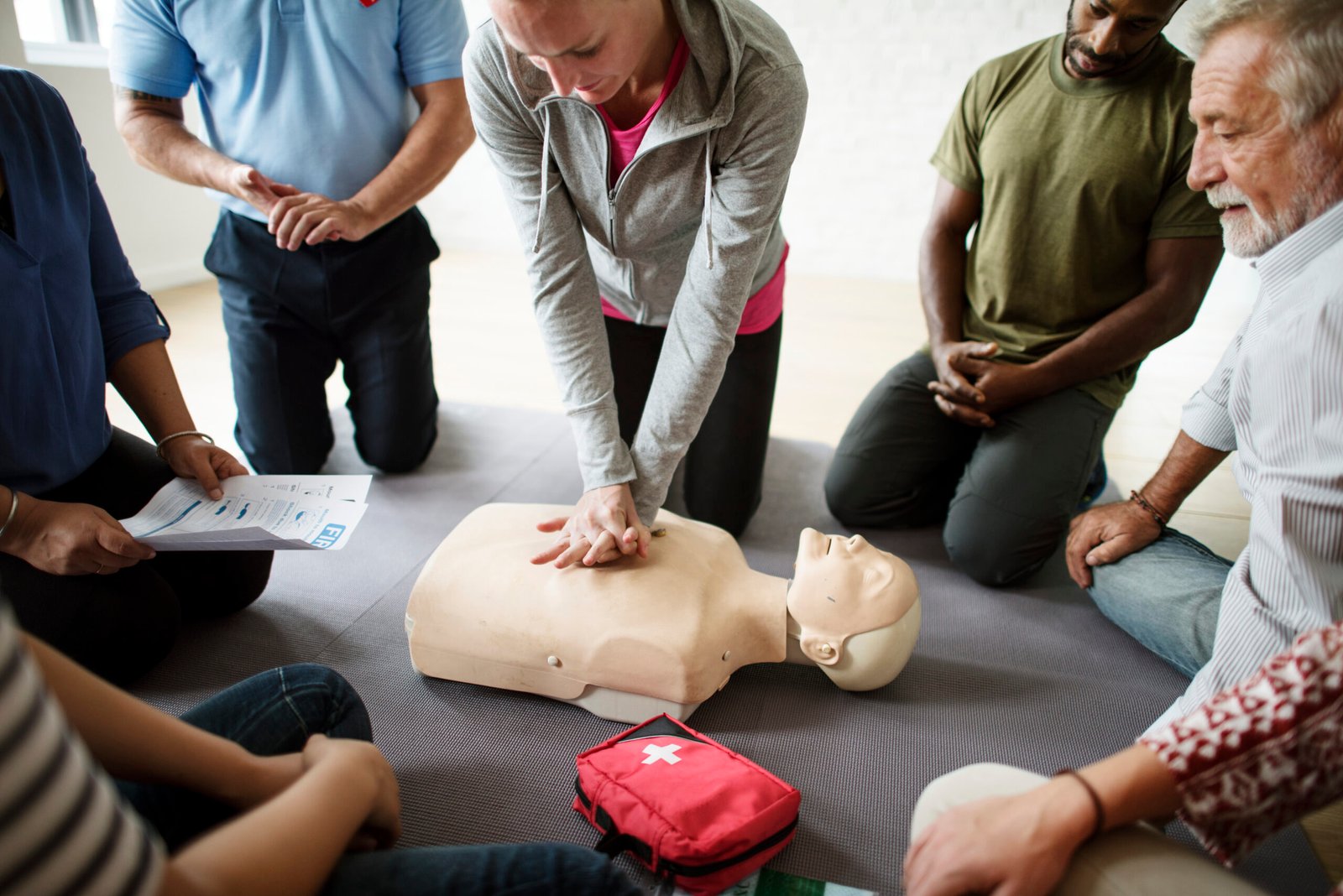
- Place the heel of one hand on the centre of their chest (between the nipples).
- Place your other hand on top, fingers interlocked.
- Push hard and fast, using your body weight.
- Aim for 100–120 compressions per minute — about the beat of “Stayin’ Alive” by the Bee Gees.
- Press the chest down at least two inches, then let it rise fully before the next push.
- Don’t stop until you see movement, an ambulance arrives, or someone else takes over.
If there’s an AED (Automatic External Defibrillator) nearby — often found in schools, churches, and supermarkets — use it. The machine gives step-by-step voice instructions and can safely deliver an electric shock to restore a normal heart rhythm.
👥 Why CPR Training Is Essential
Despite its importance, fewer than half of people who witness a cardiac arrest actually perform CPR. The main reason? Lack of training or confidence.
Dr. Eric Goralnick, an emergency medicine expert, says,
“You could save the life of a family member, friend, or stranger. Every adult should take an in-person CPR class at least once — and refresh every two to three years.”
In the UK, you can get CPR training through:
- The British Red Cross
- The British Heart Foundation (BHF)
- Local NHS Trusts and community centres
- Some churches and Nigerian associations, which run first aid workshops
Courses can take as little as one hour and may include AED training. Online and blended options are also available.
🧍🏾♀️ Let’s Build a CPR-Ready Nigerian Community in the UK
Many of us in the Nigerian community are caregivers — for family, elders, or even professionally in the health and care sector. Learning CPR is an act of love and responsibility that could save lives within our homes and communities.
Even a 20-minute online refresher can help you stay ready.
💚 Remember: It’s better to do CPR on someone who doesn’t need it than to do nothing when someone does.
❤️ Final Word
CPR isn’t just for doctors or nurses. It’s for all of us.
As Nigerians in the UK, let’s look out for one another — because the life you save could be someone you love.
Join Our WhatsApp Channel
Stay updated on the latest UK news, including education, health, job openings, and more for those living in the UK!
Join here: Naija UK Channel
Also, follow us on our social media channels for the latest updates and discussions:
- Twitter: @NaijaUKConnect
- Facebook: Naija UK Connect
- Instagram: @naijaukconnect