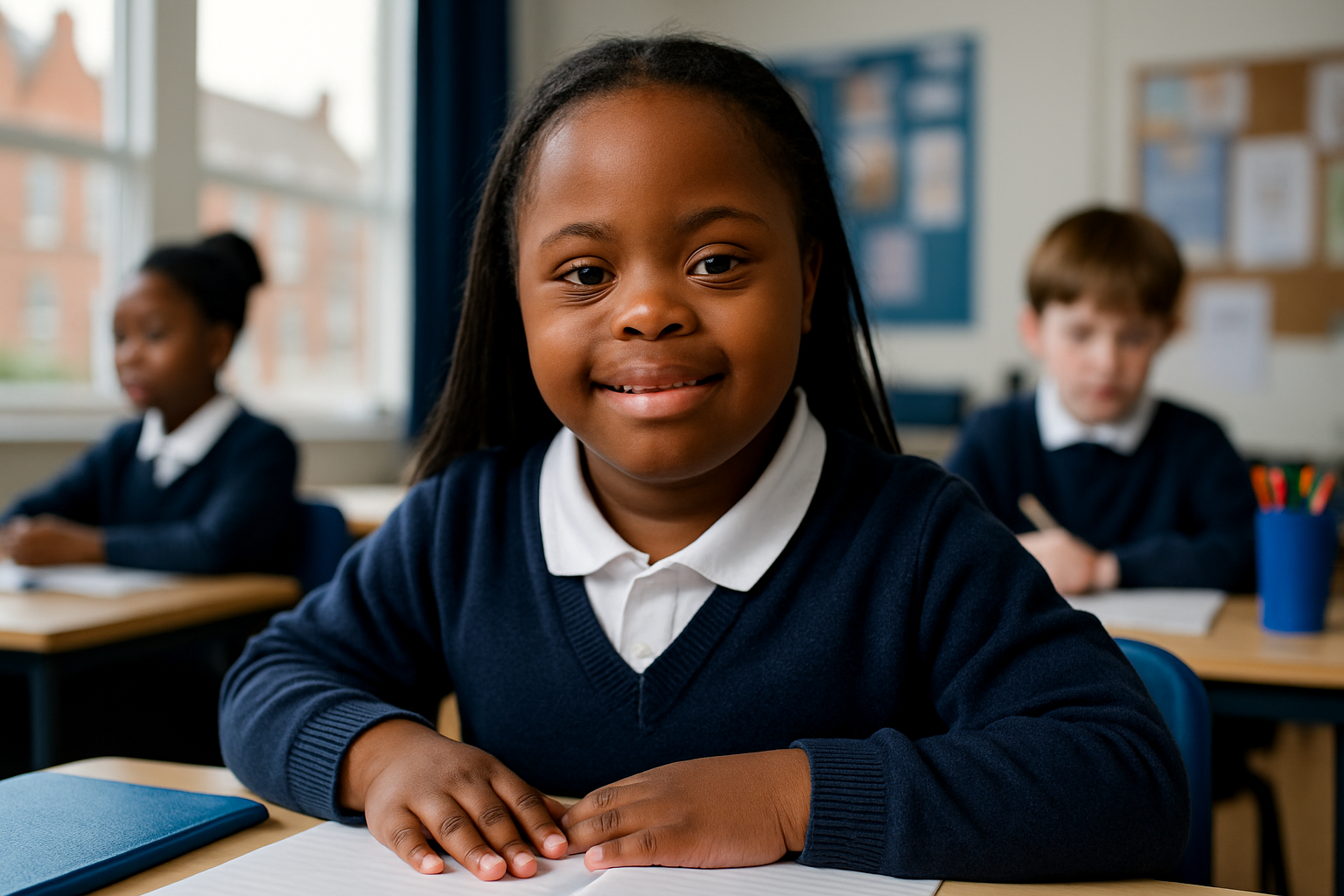
What is Down syndrome?
Down syndrome (sometimes called trisomy 21) is a genetic condition that happens when a baby is born with an extra chromosome 21. Chromosomes carry the DNA that guides how our bodies grow and function.
This extra genetic material affects how a child’s body and brain develop, causing the unique features and health needs of people with Down syndrome.
👉🏾 According to the NHS, about 1 in every 700 babies in the UK is born with Down syndrome. While there is limited research specific to Black African families, the condition affects all ethnicities equally.
How it can affect your child
Children with Down syndrome may have:
✅ A small head, flat at the back
✅ Almond-shaped eyes that slant upwards
✅ Small ears, nose, and mouth
✅ Low muscle tone (hypotonia) — babies may feel floppy
✅ Short height and small hands/feet
✅ Mild to moderate learning disabilities
Other health concerns
It’s important for African families to know that some medical conditions are more common in children with Down syndrome:
🔸 Heart conditions (around half of babies) — the NHS will screen newborns with an echocardiogram.
🔸 Hearing & vision problems — routine checks are needed.
🔸 Thyroid problems — especially underactive thyroid, so regular blood tests help.
🔸 Increased risk of infections & leukaemia — early checks and vaccinations matter.
🔸 Delayed speech and walking — but with support, many children thrive!
Diagnosis
In the UK, pregnant women are offered screening for Down syndrome. If you’re Nigerian or Black African, remember: your background doesn’t change the chance, but age does — risk increases as the mother gets older.
Babies are usually diagnosed at birth based on features, then confirmed by a chromosome blood test.
What support is available in the UK?
🇬🇧 NHS services:
✔️ Special health checks — regular heart, hearing, and thyroid screening
✔️ Early Intervention Team — physiotherapy, speech and language therapy
✔️ Educational support — many children go to mainstream schools with help
✔️ Local Down syndrome support groups — some have African parent networks
✅ Community Tip for Naija Families: Many Nigerian families worry about stigma — but it’s important to reach out. You’re not alone — talk to your GP or midwife if you have concerns.
Can Down syndrome be prevented?
No — there’s nothing parents can do to prevent it. But genetic counselling is available if you have questions about future pregnancies. Older mothers (over 35) do have a higher chance.
Treatment & living well
There is no cure for Down syndrome, but your child can live a healthy and fulfilling life with the right care and love. With good medical support and early help, many adults with Down syndrome now live into their 50s and beyond.
Top tip: Encourage play, talk, and community. Celebrate every milestone — your child’s journey may be slower, but they will get there.
When to speak to a doctor
📌 If you’re pregnant and want to know more about screening
📌 If your baby has signs of Down syndrome but no diagnosis yet
📌 If you want to connect with local Down syndrome or Black parenting support in the UK
Useful resources for Nigerians in the UK
✔️ NHS: Down’s syndrome | NHS
✔️ Down’s Syndrome Association UK: www.downs-syndrome.org.uk
✔️ Nigerian or Black Parents Network: Ask your health visitor or GP for local groups.
💚 Naija UK Connect is here for you — let’s break the stigma, share resources, and support each other.
Share this article with any Naija family who may find it helpful. 💚
Written by Dr. Ogechi Eze
Join Our WhatsApp Channel
Stay updated on the latest UK news, including education, health, job openings, and more for those living in the UK!
Join here: Naija UK Channel
Also, follow us on our social media channels for the latest updates and discussions:
- Twitter: @NaijaUKConnect
- Facebook: Naija UK Connect
- Instagram: @naijaukconnect