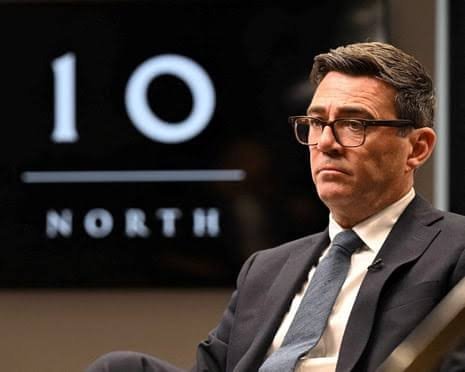
Andy Burnham Public Control Plan 2026: How the PM Wants to Boost the UK Economy
By ldadmin
September 1, 2026
Andy Burnham Public Control Plan: A New Strategy for UK Economic Growth
UK Prime Minister Andy Burnham is set to make greater public control of essential services a central part of his economic strategy, arguing that bringing key services closer to public ownership and control could help reduce household costs, encourage investment and create jobs.
In his first major Commons address as prime minister, Burnham outlined his vision for addressing what he sees as decades of economic stagnation, centralised political power and excessive privatisation. He has argued that the UK needs substantial change to restore economic confidence and give communities greater control over their future.
Burnham Sets Out Public Control Plans
Burnham’s approach places public control of essential services at the heart of his plans for economic growth.
The prime minister has criticised the performance of privatised utilities and transport services, arguing that many have become too expensive or unreliable for households while failing to deliver sufficient public value.
His government is therefore exploring ways to increase public ownership and control, particularly across sectors such as water, energy and transport.
Burnham’s wider argument is that reducing the cost of essential services could leave families with more disposable income while creating opportunities for long-term investment and employment.
The government is also pursuing greater regional devolution, with local and regional authorities expected to play a larger role in economic development and public services.
Public Ownership of Utilities
One of the most ambitious elements of Burnham’s agenda is a long-term plan to bring essential utilities under greater public control.
Water and energy are among the sectors receiving particular attention. The government is considering different approaches to public ownership while assessing how such changes could be delivered over time.
Burnham’s allies have described the programme as a long-term project rather than an immediate nationwide nationalisation programme.
The strategy reflects Burnham’s broader belief that essential services should operate in the public interest and contribute to economic development rather than simply prioritising private returns.
Public Control of Bus Services
Transport is another major part of the government’s public-control agenda.
Burnham has already highlighted efforts to bring bus services under greater public control, including initiatives involving regional authorities.
Liverpool City Region is expected to take control of its bus services, while other regions, including the West Midlands, are also pursuing models that give public authorities greater influence over local transport.
The government believes that better-connected and more affordable public transport can support workers, businesses and local economies.
Cost of Living at the Centre of the Plan
Reducing everyday household costs is another major priority for Burnham’s government.
His administration has announced or proposed measures including cheaper bus fares and changes to energy costs. A proposed reduction in VAT on energy bills is also part of the wider effort to ease pressure on household finances.
Burnham has argued that tackling the cost of essential services can help families while strengthening the wider economy.
The government is also developing plans for a national care service, alongside a broader programme of devolution intended to give local areas more control over economic and public-service decisions.
Immigration, Electoral Reform and North Sea Drilling
Burnham’s government is also facing several difficult political decisions.
Immigration legislation is expected to remain a major issue, including debates around potential exemptions for carers and other workers.
Electoral reform is another growing pressure point. More than 100 MPs have called for a commission to examine changes to the UK’s electoral system, while Labour MPs have pushed for stronger commitments on political reform.
The government is also expected to face difficult decisions over further North Sea oil and gas drilling, an issue that has generated debate within Labour.
Burnham Promises a Different Style of Government
In his first Commons address as prime minister, Burnham presented himself as a leader seeking to change the way politics is conducted.
He has promised a more collaborative approach, with greater emphasis on problem-solving rather than political point-scoring.
Burnham has also argued that Britain needs to confront the economic and political decisions of recent decades. In his speech, he pointed to the centralisation of political power, privatisation, deindustrialisation and austerity as factors that weakened communities and contributed to low growth.
His stated objective is to restore optimism while giving communities and regions greater economic agency.
Funding Challenges and Economic Pressure
Despite the scale of Burnham’s ambitions, funding remains one of the biggest challenges facing his government.
Opposition MPs are expected to question how the government will pay for its commitments, including cheaper transport, energy measures, devolution and plans for a national care service.
The government is also dealing with significant pressure on public finances and defence spending.
At the same time, rising government borrowing costs have created additional economic challenges. UK long-term borrowing costs recently reached their highest levels in decades, increasing pressure on the government’s fiscal plans.
Electoral Reform Pressure
Electoral reform could become another major test for Burnham.
Labour MPs and opposition parties have called for an independent commission to examine possible changes to the UK’s voting system.
The Liberal Democrats have backed calls for a national commission, while other MPs have urged Burnham to demonstrate that his government is willing to pursue meaningful political reform.
The issue could become increasingly significant as Burnham seeks to distinguish his government from its predecessors.
What Burnham’s Public Control Strategy Means for the UK
Burnham’s public-control agenda represents a significant shift in the direction of UK economic policy.
The strategy focuses on giving government and local authorities greater influence over essential services, while using devolution to transfer more decision-making power away from Westminster.
Supporters argue that public control could help reduce costs, improve services and encourage long-term investment.
Critics, however, are likely to question the cost of expanding public ownership and whether government control can deliver more efficient services.
The success of Burnham’s strategy will ultimately depend on whether his government can turn its ambitious proposals into affordable and effective policies.
Conclusion
Andy Burnham’s public-control strategy is emerging as one of the defining features of his early premiership.
From transport and utilities to regional devolution, the government is seeking to give the public and local authorities a greater role in controlling essential services.
Burnham argues that this approach can help reduce household costs, create jobs, stimulate investment and restore economic confidence.
However, delivering the programme will require significant funding, political support and careful implementation.
As Parliament returns and scrutiny of the government’s plans intensifies, Burnham will face a crucial test: proving that greater public control can translate into tangible improvements for households, businesses and communities across the UK.
SEO Keywords
- Andy Burnham public control
- Andy Burnham public ownership 2026
- Andy Burnham UK economy
- UK public ownership plans 2026
- Andy Burnham economic plans
- UK utilities public ownership
- UK bus services public control
- Andy Burnham prime minister 2026
- UK economic growth 2026
- UK cost of living 2026
Join Naija UK Connect
Stay updated with the latest UK visa sponsorship jobs, relocation opportunities, and career guides tailored for Nigerians through Naija UK Connect.
Join here: Naija UK Channel
Also, follow us on our social media channels for the latest updates and discussions:
Twitter: @NaijaUKConnect
Facebook: Naija UK Connect
Instagram: @naijaukconnect