
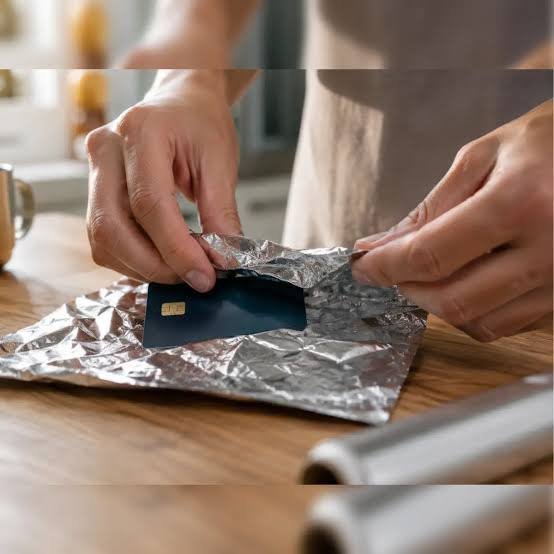
Why People Wrap Their Wallets in Aluminium Foil to Prevent Wireless Theft
It may sound strange, but some people wrap their wallets in aluminium foil to help protect themselves from wireless scanning. With many modern wallets carrying contactless credit cards, transport passes, work ID badges, passport cards, and enhanced driver’s licences, concerns about unauthorised RFID (Radio Frequency Identification) scanning have grown.
Although aluminium foil isn’t a perfect solution, it can help block radio signals and reduce the risk of certain types of wireless data collection.
Why Are People Wrapping Their Wallets in Foil?
If you’ve spent time on TikTok recently, you’ve probably seen videos of people wrapping their wallets in kitchen foil. While it may look unusual, the idea is based on a real security principle.
Many cards now contain RFID or NFC (Near Field Communication) chips that transmit information wirelessly. These technologies make contactless payments, public transport, and identity verification faster and more convenient.
However, some RFID-enabled documents—such as Enhanced Driver’s Licences (EDLs) and passport cards in the United States—can be detected from several feet away using specialised RFID readers.
Privacy advocates have long argued that these signals could potentially be used for unauthorised tracking or data collection if adequate safeguards are not in place.
What Is the Real Risk?
It’s important to separate fact from fiction.
Contrary to some online claims, criminals cannot simply walk past you and instantly empty your bank account using an RFID scanner.
Most RFID-enabled identification cards transmit only a unique reference number—not your personal information or banking details. Accessing sensitive information typically requires secure systems and additional authentication.
The greater concern is privacy rather than direct financial theft. If a device repeatedly reads the same unique identifier, it could theoretically be used to track a person’s movements over time.
Does Aluminium Foil Actually Work?
Yes—to a certain extent.
Aluminium is an excellent conductor of electricity and can block or weaken radio-frequency signals. This is the same scientific principle behind a Faraday cage, which shields electronic devices from electromagnetic signals.
When wrapped completely around a wallet, aluminium foil can reduce the ability of RFID readers to communicate with the cards inside.
However, there are some limitations:
- Torn or damaged foil may allow signals to pass through.
- Loose wrapping is less effective than tightly sealed layers.
- Different RFID systems operate at different frequencies, so effectiveness varies.
- Foil is not durable for everyday use.
For temporary protection, several layers of aluminium foil can work reasonably well, but it isn’t designed as a long-term solution.
RFID-Blocking Wallets Offer Better Protection
Cybersecurity experts generally recommend RFID-blocking wallets or RFID-blocking sleeves instead of aluminium foil.
These products are specifically designed with conductive materials that create a protective shield around RFID-enabled cards while remaining durable and convenient for everyday use.
Unlike household foil, RFID-blocking wallets are built to withstand daily wear and provide more consistent protection.
Which Cards Can Be Read Wirelessly?
Depending on where you live, your wallet may contain several RFID-enabled items, including:
- Contactless credit and debit cards
- Passport cards
- Enhanced Driver’s Licences (available in some U.S. states)
- Public transport cards
- Workplace access badges
- University or campus ID cards
- Hotel key cards
Not all of these pose the same level of privacy risk, but they all rely on wireless communication technology.
Enhanced Driver’s Licences and Passport Cards
In the United States, Enhanced Driver’s Licences (EDLs) are currently issued in only a handful of states and contain long-range RFID technology used at certain border crossings.
Similarly, U.S. passport cards also include RFID chips to speed up border processing. To reduce unwanted scanning, passport cards are issued with protective RFID-blocking sleeves.
These cards are designed to transmit only a unique identification number rather than personal information, but some privacy advocates continue to recommend additional protection against unauthorised scanning.
Is Wrapping Your Wallet in Foil Worth It?
For most people, the risk of wireless theft is relatively low.
However, if your wallet contains several RFID-enabled cards and you’re concerned about privacy, shielding them may offer additional peace of mind.
While aluminium foil can provide temporary protection, investing in a quality RFID-blocking wallet or protective sleeve is a more practical, durable, and reliable solution.
Final Thoughts
The trend of wrapping wallets in aluminium foil isn’t simply an internet gimmick—it has a legitimate scientific basis. Aluminium can block radio-frequency signals and reduce the likelihood of unauthorised RFID scanning.
That said, the average person is far more likely to lose their wallet or fall victim to phishing scams than to experience RFID-related theft.
If wireless privacy is important to you, an RFID-blocking wallet provides a cleaner, longer-lasting solution than wrapping your wallet in kitchen foil.
Join Naija UK Connect
Stay updated with the latest UK visa sponsorship jobs, relocation opportunities, and career guides tailored for Nigerians through Naija UK Connect.
Join here: Naija UK Channel
Also, follow us on our social media channels for the latest updates and discussions:
Twitter: @NaijaUKConnect
Facebook: Naija UK Connect
Instagram: @naijaukconnect