
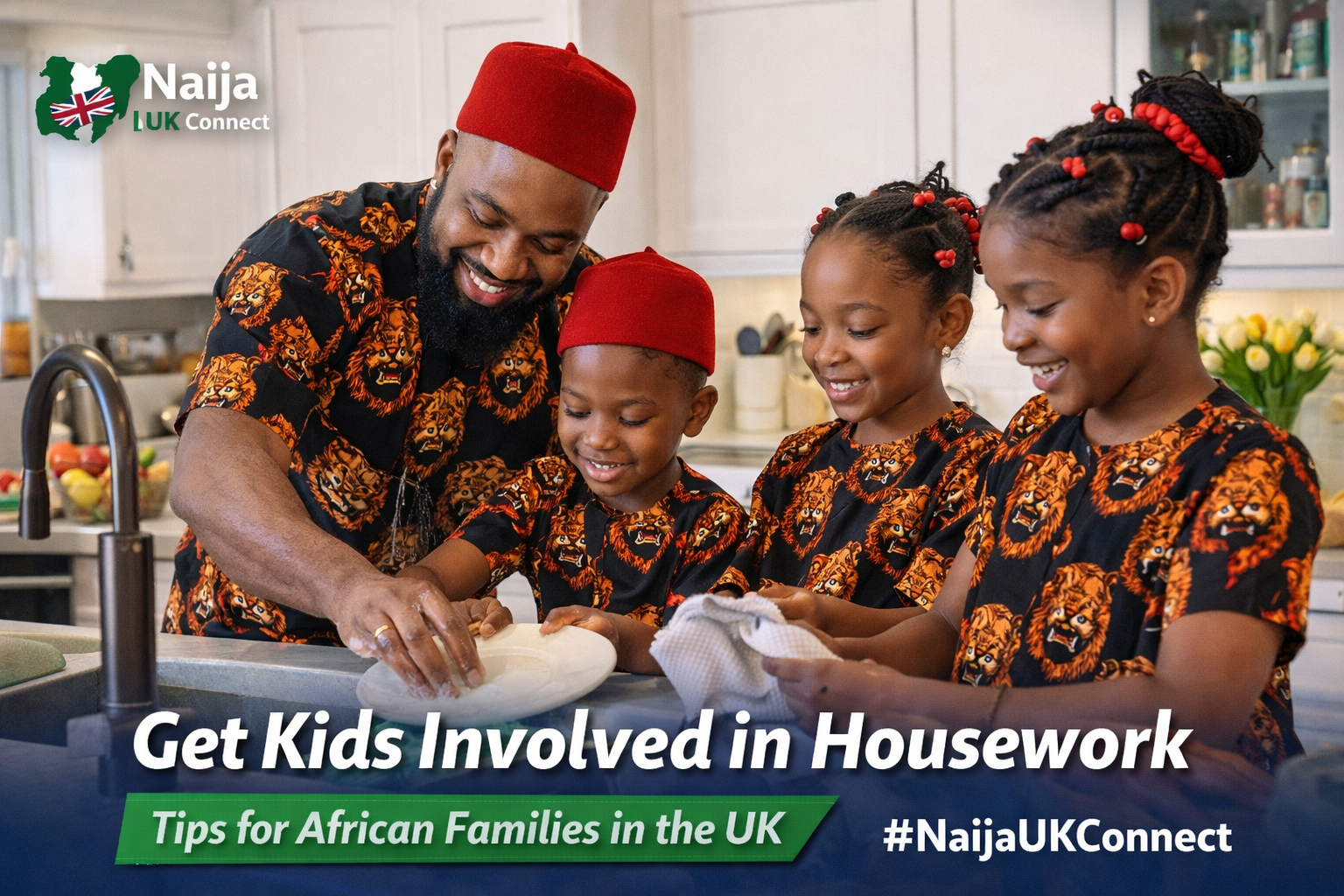
Many African families moving to the UK quickly realise that life here is very different from back home. In Nigeria and many African countries, families may have house helps, extended family members, or relatives who assist with household chores.
In the UK, however, most families operate a “do-it-yourself” household. Parents work, children go to school, and everyone shares responsibilities at home.
Teaching children to help with housework is not just about reducing stress for parents—it’s about raising responsible, independent young people who can take care of themselves as they grow.
Here are some practical ways African parents in the UK can encourage their children to take part in household chores.
1. Teach by Doing, Not Just Telling
In many African homes, children are often told what to do through instructions. But children learn better when they see and participate in the process.
Instead of sending them away from the kitchen or cleaning area, involve them.
Practical examples:
- Let them help wash rice before cooking jollof rice
- Ask them to pass ingredients while cooking soup
- Allow them to wipe the kitchen table or help set the dining table
Explain why each step is important. When children understand the process, they become more interested and confident.
2. Turn Everyday Chores Into Learning Opportunities
Housework can actually help children develop important skills they use in school and later in life.
For example:
Math Skills
Measuring ingredients while cooking teaches basic maths and counting.
Organisation Skills
Sorting laundry or tidying their room teaches order and responsibility.
Time Management
Giving children small daily tasks helps them learn how to manage their time after school.
Simple activities like packing their school bag, making their bed, or helping with groceries can teach them valuable life skills.
3. Make Responsibility a Family Culture
Children are more willing to help when they see that everyone in the household contributes.
Instead of making chores feel like punishment, present them as shared family responsibilities.
For example:
- Parents cook while children set the table
- One child helps clear the plates
- Another helps wipe the table or load the dishwasher
This approach teaches teamwork, equality, and responsibility.
It also helps children feel proud that they are contributing to the home.
4. Encourage Independence (Even If It’s Not Perfect)
Many parents want things done perfectly, but learning requires patience and practice.
Sometimes children may:
- Spill water while washing plates
- Fold clothes imperfectly
- Leave small messes while cleaning
That is part of the learning process.
Instead of correcting every mistake, encourage their effort first.
When children feel safe to try, they become more confident and independent.
The Long-Term Benefit
When African children growing up in the UK learn household responsibilities early, they develop skills that help them later in life.
They become young adults who can:
- Cook basic meals
- Manage their time
- Maintain their living space
- Take responsibility for themselves
These skills prepare them for university life, work, and independent living.
Most importantly, they grow into responsible adults who understand teamwork and respect family values.
✔ Parent Tip for African Families in the UK:
Start with small age-appropriate chores and gradually increase responsibility as children grow.
Join Our WhatsApp Channel
Stay updated on the latest UK news, including education, health, job openings, and more for those living in the UK!
Join here: Naija UK Channel
Also, follow us on our social media channels for the latest updates and discussions:
- Twitter: @NaijaUKConnect
- Facebook: Naija UK Connect
- Instagram: @naijaukconnect