
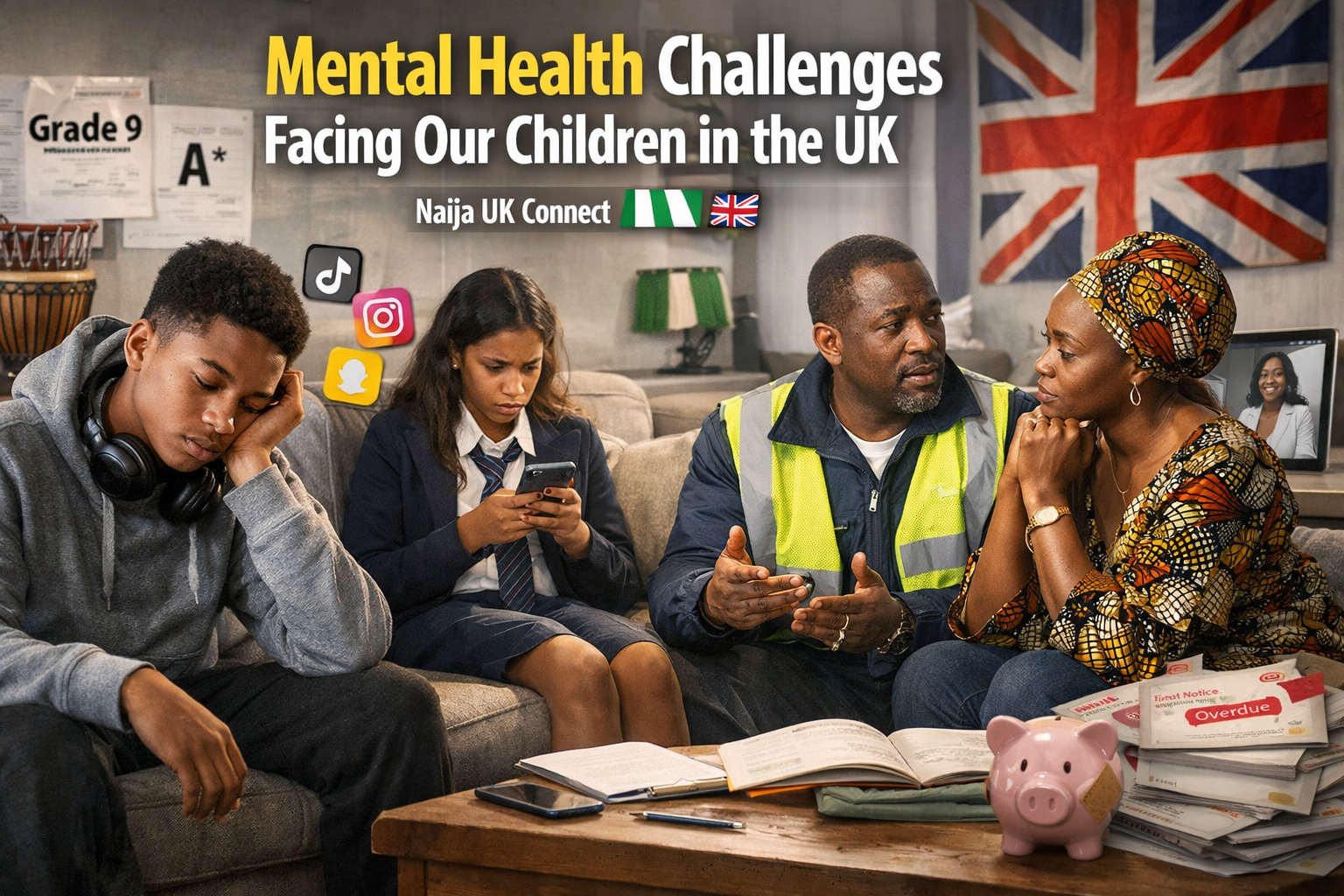
A Naija UK Connect Perspective
For many of us in the Naija UK community, relocating to the UK was never just about us — it was about giving our children better opportunities.
We survived a strict, competitive system back home. We were raised to be strong, resilient, and hardworking. Naturally, we’ve brought that same drive into parenting in the UK.
But here’s the reality: our children are growing up in a very different environment — socially, emotionally, and academically. And their mental health challenges are not the same as what we experienced.
Let’s talk about eight key factors affecting the well-being of our children in the UK today.
1. The “Grade 9” Pressure (Academic Competitiveness)
In the UK, academic success is measured heavily through GCSEs and A-Levels.
For many Nigerian parents, anything below an A* (or Grade 9) can feel disappointing. We mean well — excellence is part of our DNA — but when performance becomes identity, children begin to tie their worth to exam results.
Not every child will be an academic high-flyer. And that’s okay.
2. The Weight of “Japa” Expectations
Our children see our sacrifices.
They see the double shifts. The NHS night work. The care jobs. The long commutes. The struggle to settle, retrain, and rebuild.
Many carry an unspoken pressure:
“I must not waste my parents’ sacrifice.”
When expectations feel heavier than their capacity, it can lead to anxiety, burnout, and feelings of inadequacy.
3. Limited Emotional Literacy at Home
Back home, we didn’t grow up talking about anxiety, depression, or emotional regulation.
In the UK, children are encouraged to name and express emotions. But many of our homes still operate on:
- “Be strong.”
- “Pray about it.”
- “Don’t think too much.”
- “Other children are doing better.”
Without emotional vocabulary, our children may struggle to explain what they’re feeling — and suffer quietly.
4. Living Between Two Cultures
At home:
Respect elders. No backchat. Strong cultural expectations.
At school:
Question authority. Be expressive. Explore identity.
Our children are navigating two worlds daily — Nigerian values and British norms. That tension can create identity confusion, especially during teenage years.
They may feel:
- “Too Nigerian” at school
- “Too British” at home
That internal conflict can quietly impact mental health.
5. Social Media & Digital Comparison
The pressure doesn’t stop in the classroom.
On TikTok, Instagram, and Snapchat, success is visual and constant. Likes, followers, fashion, achievements — everything is measured publicly.
Now add comparison with:
- UK classmates
- Friends back in Nigeria
- Influencers living “perfect” lives
The fear of exclusion or “not measuring up” can be emotionally draining.
6. Cost of Living Stress
Children are more aware than we think.
They hear conversations about:
- Rent increases
- Energy bills
- Sending money home
- Visa renewals
- Job insecurity
Even when we don’t tell them directly, they feel the tension. Financial instability can make children anxious about the future and distract them from learning.
7. Screen Time & Overstimulation
Technology is not the enemy — but unmanaged usage is.
Constant scrolling affects:
- Attention span
- Sleep quality
- Emotional regulation
What we sometimes label as “laziness” may actually be a brain overwhelmed by digital overstimulation.
Our children’s nervous systems are under more pressure than ours ever were at their age.
8. Cultural Gaps in Support Systems
UK schools have pastoral teams and wellbeing officers. That’s positive.
But support can be:
- Reactive instead of preventive
- Culturally unaware of Nigerian parenting dynamics
Some children feel misunderstood because professionals may not fully grasp the cultural expectations within African households.
That gap can make it harder for them to open up.
The Way Forward for Naija UK Parents
We cannot simply:
- “Pray it away”
- Compare them to cousins
- Or tell them to “be strong”
Faith is powerful. Discipline is important. Excellence matters.
But so does emotional safety.
As parents, we can:
- Celebrate effort, not just grades
- Create space for open conversations
- Ask, “How are you feeling?” — not just “How was school?”
- Model healthy emotional expression
- Seek culturally competent support when needed
Our goal is not just to raise successful children.
It is to raise emotionally healthy, confident young adults who know they are valued beyond performance.
At Naija UK Connect, we believe thriving in the UK means supporting the whole child — academically, emotionally, culturally, and spiritually.
Because the real “better life” we moved for includes their mental wellbeing too.
Join Our WhatsApp Channel
Stay updated on the latest UK news, including education, health, job openings, and more for those living in the UK!
Join here: Naija UK Channel
Also, follow us on our social media channels for the latest updates and discussions:
- Twitter: @NaijaUKConnect
- Facebook: Naija UK Connect
- Instagram: @naijaukconnect