Many popular drinks in the UK contain far more sugar than most people realise. What feels like a quick refresh or energy boost can quietly become a sugar overload.
For context, the NHS recommends no more than 30g of free sugar per day for adults. Just one drink can meet—or exceed—that limit.
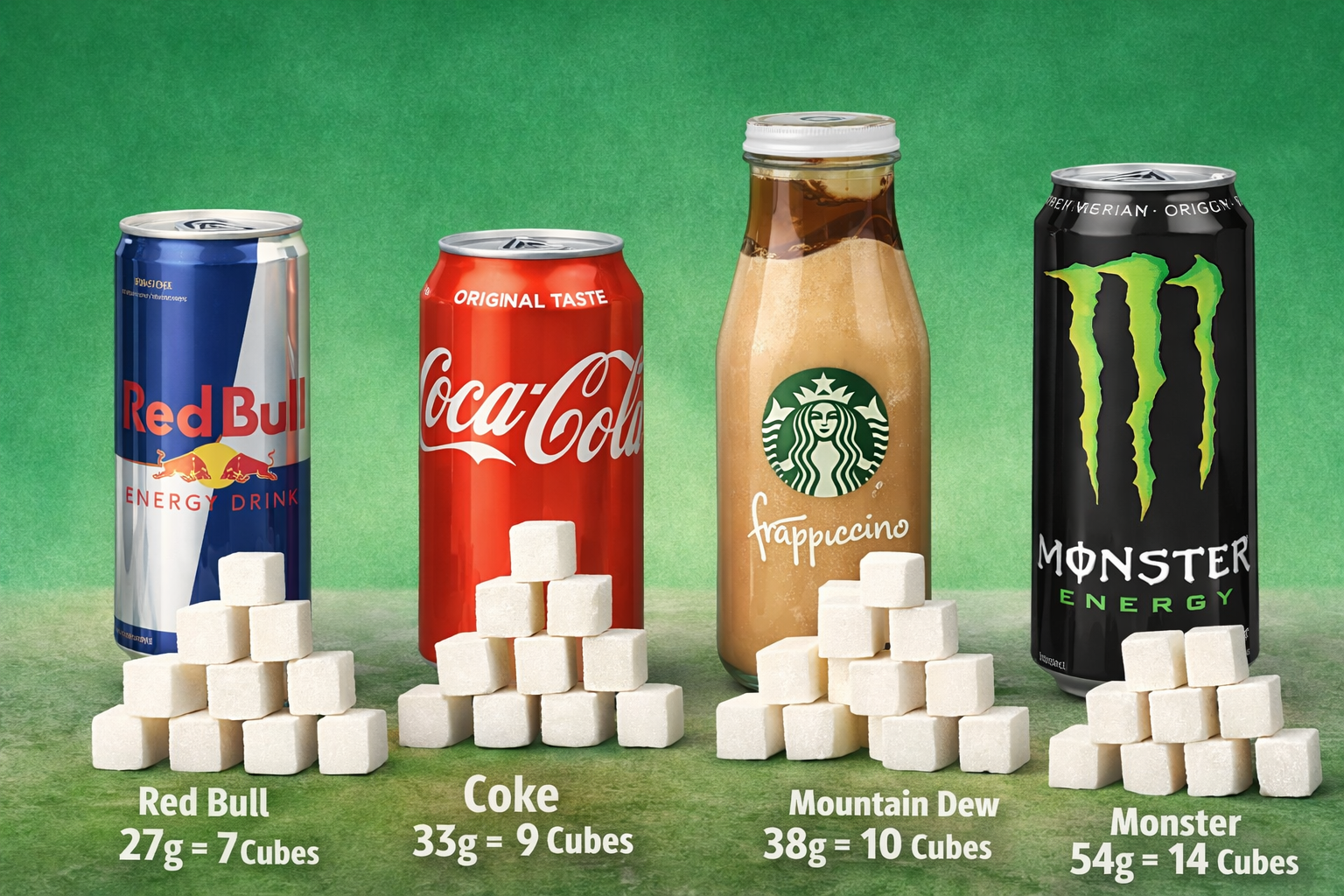
Below is a breakdown of common drinks, showing sugar content in grams and the equivalent number of sugar cubes
(1 sugar cube ≈ 4g).
🥤 Sugar Content in Popular Drinks
- Red Bull
▸ 27g sugar ≈ 7 sugar cubes - Sprite
▸ 33g sugar ≈ 8 sugar cubes - Coca-Cola
▸ 35g sugar ≈ 9 sugar cubes - Pepsi
▸ 36g sugar ≈ 9 sugar cubes - Mountain Dew
▸ 38g sugar ≈ 10 sugar cubes - Starbucks Frappuccino
▸ 47g sugar ≈ 12 sugar cubes - Monster Energy Drink
▸ 54g sugar ≈ 14 sugar cubes
⚠️ What the NHS Says About “Zero-Sugar” Drinks
Many people switch to diet or zero-sugar drinks, but it’s important to understand what they contain.
🔬 Zero-Sugar ≠ Sugar-Free
According to NHS guidance:
- Zero-sugar drinks are made with artificial or low-calorie sweeteners (such as aspartame, sucralose, acesulfame-K)
- These sweeteners are approved for use and considered safe within recommended limits
⚠️ But the NHS also advises caution
- Sweeteners do not reduce cravings for sweet tastes
- They may encourage a continued preference for very sweet foods and drinks
- Diet drinks can still affect appetite, gut health, and eating habits
- They are not a healthy substitute for water
👉 The NHS advises that water, milk, and unsweetened tea or coffee should be the main drinks we choose.
So while zero-sugar drinks may be better than full-sugar versions for diabetes control, they should not be consumed frequently or relied on daily.
🧠 Why This Matters for Nigerians in the UK
For many Nigerians managing:
- “Borderline sugar”
- Diabetes
- High blood pressure
- Weight concerns
Both high-sugar drinks and frequent zero-sugar drinks can work against long-term health goals.
✅ Healthier Everyday Alternatives (NHS-Recommended)
- 💧 Water (still or sparkling)
- 🥛 Semi-skimmed or skimmed milk
- ☕ Tea or coffee without sugar
- 🍋 Water infused with lemon, cucumber, or mint
- 🧃 Fruit juice diluted with water (small amounts only)
💡 Naija UK Connect Health Tip
Sugar doesn’t just come from food—drinks are often the biggest hidden source.
And while zero-sugar drinks remove sugar, they don’t automatically make a drink healthy.
The goal isn’t replacement—it’s reduction and better habits.
Naija UK Connect — sharing practical, NHS-aligned health information for Nigerians living in the UK.
Join Our WhatsApp Channel
Stay updated on the latest UK news, including education, health, job openings, and more for those living in the UK!
Join here: Naija UK Channel
Also, follow us on our social media channels for the latest updates and discussions:
- Twitter: @NaijaUKConnect
- Facebook: Naija UK Connect
- Instagram: @naijaukconnect