
Jobs • Travel Rules • Minimum Wage • Junk Food Ads • Ticket Prices
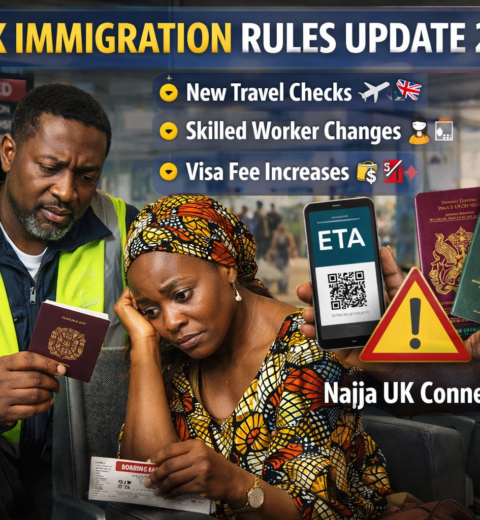
As 2026 approaches, the UK government is rolling out major legal and policy changes that will affect work, travel, housing, benefits, and daily life.
For Nigerians living in the UK—or planning to move—here’s a plain-English breakdown of what’s changing and how it may affect you.
✈️ Travel Changes: New Fees & Border Rules
£17 Fee to Travel to Europe (From Late 2026)
If you live in the UK and plan to travel to Europe:
- A new system called ETIAS (European Travel Information and Authorisation System) will launch in late 2026
- Cost: €20 (about £17) per adult (under 70)
- Valid for up to 3 years
- You must apply online before travelling
This applies to trips to Schengen countries (e.g. France, Spain, Germany, Italy, Switzerland).
EU Entry Exit System (EES)
- Passport scanning + fingerprints + photo at EU borders
- Rolling out fully by April 2026
- No fee, but expect longer border queues initially
🇬🇧 New UK Entry Rules (ETA System)
From February 25, visitors from 85 visa-free countries (including the US, Canada, and EU countries) must apply for a UK Electronic Travel Authorisation (ETA) before travelling.
- Cost: £16
- Apply via the official UK ETA app
- Most approvals come within minutes (allow up to 3 working days)
🔹 British & Irish citizens (including dual nationals) are exempt.
This move is part of the UK’s plan to fully digitise immigration and border control.
🍔 Junk Food Advertising Ban (From January 2026)
To tackle childhood obesity:
- Unhealthy food adverts (high fat, sugar, or salt) will be banned
- Applies to TV and online ads between 5:30am – 9pm
- Covers items like:
- Sugary drinks
- Chocolates & sweets
- Ice cream
- Pizzas & fast food
- Sweetened cereals
🚫 Outdoor ads (billboards, buses, shops) are not affected.
⚡ Energy Drinks Ban for Under-16s (Proposed)
The UK government plans to ban the sale of high-caffeine energy drinks to children under 16.
- Applies to shops, cafés, online stores & vending machines
- Drinks with over 150mg of caffeine per litre
- Tea, coffee, and low-caffeine soft drinks are exempt
⚠️ This is not yet law, but could take effect in 2026 if approved.
👩🏾💼 Big Changes to Workers’ Rights
Following the Employment Rights Act (passed in late 2025), new protections are rolling out:
From April 2026
- Statutory sick pay from day one (no waiting period)
- Removal of lower earnings limit for sick pay
- Parental leave & paternity pay from day one
- Stronger redundancy protections
From October 2026
- ‘Fire and rehire’ & ‘fire and replace’ banned
- Employers can’t sack workers for refusing unfair contract changes
- Stronger tipping laws
- Tougher rules against workplace sexual harassment
Future changes (from 2027) may include:
- End of zero-hour contracts
- Bereavement leave (including pregnancy loss)
- Stronger rights for pregnant workers
💷 Minimum Wage Increase (April 2026)
Good news for low-paid workers:
- £12.71/hour – National Living Wage (21+)
- £10.85/hour – Ages 18–20
- £8.00/hour – Ages 16–17 & Apprentices
This is aimed at helping workers cope with the rising cost of living.
🏠 Rental & Housing Changes
Tenants in England can expect:
- Ban on no-fault evictions
- End of fixed-term tenancies
- Ban on rental bidding wars
⚠️ Wales has separate housing laws, and changes there are still under discussion.
🏡 Work-From-Home Tax Relief Ending
From 6 April 2026:
- Employees can no longer claim tax relief for working-from-home expenses
- About 300,000 workers affected
- Estimated yearly impact:
- Basic rate taxpayers: ~£62 more tax
- Higher rate taxpayers: ~£124 more tax
🚨 Stronger Action Against Benefit Fraud
The Department for Work and Pensions (DWP) will gain new powers:
- Money can be taken directly from bank accounts of benefit fraudsters
- Driving licences may be suspended for debts over £1,000
- No access to personal spending data (according to government)
These measures are expected to save £1.5 billion by 2030.
🎟️ Ticket Reselling Clampdown
New laws aim to stop ticket touts:
- Tickets can’t be resold above face value
- Applies to concerts, sports, comedy, theatre
- Expected savings: £37 per ticket on average
If passed, this could take effect in 2026.
🔮 Looking Ahead: 2027 & Beyond
- Plastic wet wipes banned in England (from 2027)
- Martyn’s Law: tougher anti-terror security for large venues
- Assisted dying law still under debate (not yet approved)
🇳🇬 What This Means for Nigerians in the UK
These changes affect:
- Workers on Skilled Worker, Graduate & dependent visas
- Nigerians who travel frequently to Europe
- Families, tenants, students, and low-income earners
Staying informed helps you plan better, avoid fines, and protect your rights.
Follow Naija UK Connect
We break down UK laws, immigration updates, jobs, and opportunities in a way Nigerians can actually understand.
🔗 Visit: naijaukconnect.co.uk
📲 Follow us for verified UK updates — no scams, no guesswork.
Join Our WhatsApp Channel
Stay updated on the latest UK news, including education, health, job openings, and more for those living in the UK!
Join here: Naija UK Channel
Also, follow us on our social media channels for the latest updates and discussions:
- Twitter: @NaijaUKConnect
- Facebook: Naija UK Connect
- Instagram: @naijaukconnect